

Death Doulas, Death Cafes, and Grounding Through Grief with Michelle Polacinski
Death Doulas, Death Cafes, and Grounding Through Grief with Michelle Polacinski
What is a death doula — and do you actually need one? In this episode, end-of-life doula, herbalist, and death cafe facilitator Michelle Polacinski breaks it all down. Michelle became interested in death and dying after a near-deadly reaction to an antibiotic at age 23 left her unable to walk for months, facing her own mortality alone and far from home. That experience transformed her life — and eventually led her to the work she does today.
Michelle explains the role of a death doula and how they work alongside hospice, what happens at a death cafe and why talking openly about death matters, and the Swedish death cleaning movement — a practical and meaningful way to prepare your loved ones and spark important conversations before it's too late.
She also shares her personal grounding practice and her biggest takeaway for anyone navigating grief: when you need to cry, just cry. Don't hold back.
Death Cafe: https://deathcafe.com
Channeling Grief Into Purpose: The Story Behind Get Griefy Magazine with Kera Sanchez
The Story Behind Get Griefy Magazine with Kera Sanchez
What do you do when you're holding your newborn for the very first time and you get the call that your mother has died? For Kera Sanchez, the answer — eventually — was to build something.
In this episode, Kera shares the origin story of Get Griefy Magazine, a free, colorful, community-driven publication created to make grief approachable and to give grievers a place to feel seen. She talks about the secondary losses that followed her mother's sudden death, how grief reshaped her identity and career, and why community built through vulnerability may be one of the most powerful tools a grieving person has.
This is a conversation about benefit finding, finding your people, and what it looks like to channel pain into purpose — in whatever form that takes.
🔗 Get Griefy Magazine: https://getgreifemagazine.com (Digital edition always free — print available on Amazon)
Listen on your favorite podcast platform or watch on YouTube at: https://youtu.be/4ZncPwl7kms

Secondary Losses in Grief: Why Loss Changes More Than You Think
Secondary Losses in Grief: Why Loss Changes More Than You Think
Secondary Losses in Grief: Why Loss Changes More Than You Think
Grief is rarely about just one loss.
When someone dies, we may also lose routines, identity, security, future plans, and the roles we once held. These are called secondary losses — and they can make grief feel overwhelming and confusing.
In this episode, Nicole Lee joins us to explore:
Why grief feels like more than one loss
Emotional overwhelm and “energy in motion”
Identity changes after death
The idea that loyalty does not require ongoing suffering
How growth can coexist with pain
Grief is deeply personal — and it evolves over time.
Grief After Suicide Loss: Stigma, Boundaries, and Finding Support with Sarah Shelton
Grief After Suicide Loss: Stigma, Boundaries, and Finding Support with Sarah Shelton
Suicide loss is one of the most isolating and misunderstood grief experiences there is — and Sara Shelton knows this firsthand. After losing her sister Heidi to suicide in 2019, Sara navigated stigma, family silence, and a profound lack of resources for suicide loss survivors. Now, as founder of The Postvention Project, she's working to change that.
In this episode, Sara talks openly about why suicide grief is different, how stigma keeps survivors isolated, and why boundaries during grief are not about pushing people away — they're an act of love and self-preservation. She also shares what she's learning through her survivor research interviews, why finding community with other suicide loss survivors is one of the most powerful steps toward healing, and what to say — and not say — when someone you love is grieving a suicide loss.
If you or someone you know has been impacted by suicide loss, this episode offers honest, compassionate insight from someone who has lived it.
If you are struggling, please reach out to the 988 Suicide and Crisis Lifeline by calling or texting 988.
🔗 The Postvention Project: https://www.postventionproject.com 🔗 Sara on LinkedIn: https://www.linkedin.com/in/sarashelton/

What No One Tells You About Stillbirth Grief with Vallen Webb
What No One Tells You About Stillbirth Grief with Vallen Webb
Stillbirth grief is one of the most misunderstood and isolating experiences a family can go through — and Vallen Webb knows this firsthand. After the stillbirth of her daughter Evelyn in 2019, Vallen navigated postpartum depression, rage, isolation, a husband deployed overseas who never got to hold his daughter, and a cascade of secondary losses that took years to untangle.
In this episode, Vallen shares what she wishes society understood about stillbirth and infant loss, how disenfranchised grief shows up for bereaved families, and why routine became her survival tool when everything else felt out of control. She also offers four simple but powerful self-care anchors — sun, movement, water, and sleep — and talks honestly about how she continues to honor Evelyn seven years later.
Her mission says it all: grief doesn't need fixing. It needs witnessing.
🔗 Instagram: https://www.instagram.com/evelynjamesandco/ 🔗 Facebook: https://www.facebook.com/ValenWebb
Healing Stuck Grief: Ketamine, EMDR, and the Grief Impact Statement with Karen Sprinkel
Ketamine, EMDR, and the Grief Impact Statement with Karen Sprinkel
Some people do years of therapy and still feel stuck in their grief. In this episode, trauma specialist, psychotherapist, and author Karen Sprinkel shares the innovative east-west approach she has developed over decades of working with grieving clients — combining EMDR, somatic experiencing, internal family systems, ketamine-assisted therapy, and a Buddhist philosophical framework to help people finally find lasting relief.
Karen explains why ketamine combined with traditional trauma modalities produces more durable, sustaining change than either approach alone, how she assesses clients mentally, somatically, and spiritually before any intensive work begins, and what after-death communications look like in a psychedelic-assisted therapy context. She also introduces the grief impact statement — a powerful tool she developed from her early work in victim advocacy that gives grievers a structured way to be witnessed in their loss, whether or not there was ever a perpetrator to face in court.
If you or someone you love has been stuck in grief and wonders if there's something more, this episode offers a genuinely different path forward.
🔗 Karen's Website: https://www.karensprinkel.com 🔗 Instagram: @thethrivingself 🔗 IADC Training: https://www.iadctraining.org
Listen on your favorite podcast platform or watch on YouTube at: https://youtu.be/jE-7rtNJAvo
Signs From Loved Ones After Death: Mediumship, Meditation & Healing
Signs From Loved Ones After Death: Mediumship, Meditation & Healing
Signs From Loved Ones After Death: Mediumship, Meditation & Healing
After someone dies, many people wonder:
Was that a sign?
In this episode, we’re joined by intuitive medium Deb DeCelle to talk about the experience of receiving signs from loved ones in spirit. We explore meditation as a tool for connection, the role of gratitude in noticing signs, and how maintaining a bond after death can support healing.
We discuss:
What signs from loved ones may look like
Why meditation can help quiet grief
Doubt and skepticism around spiritual experiences
Continuing connection after loss
How gratitude can deepen awareness
Grief doesn’t erase connection — it transforms it.
As always, we close with practical steps you can try this week.
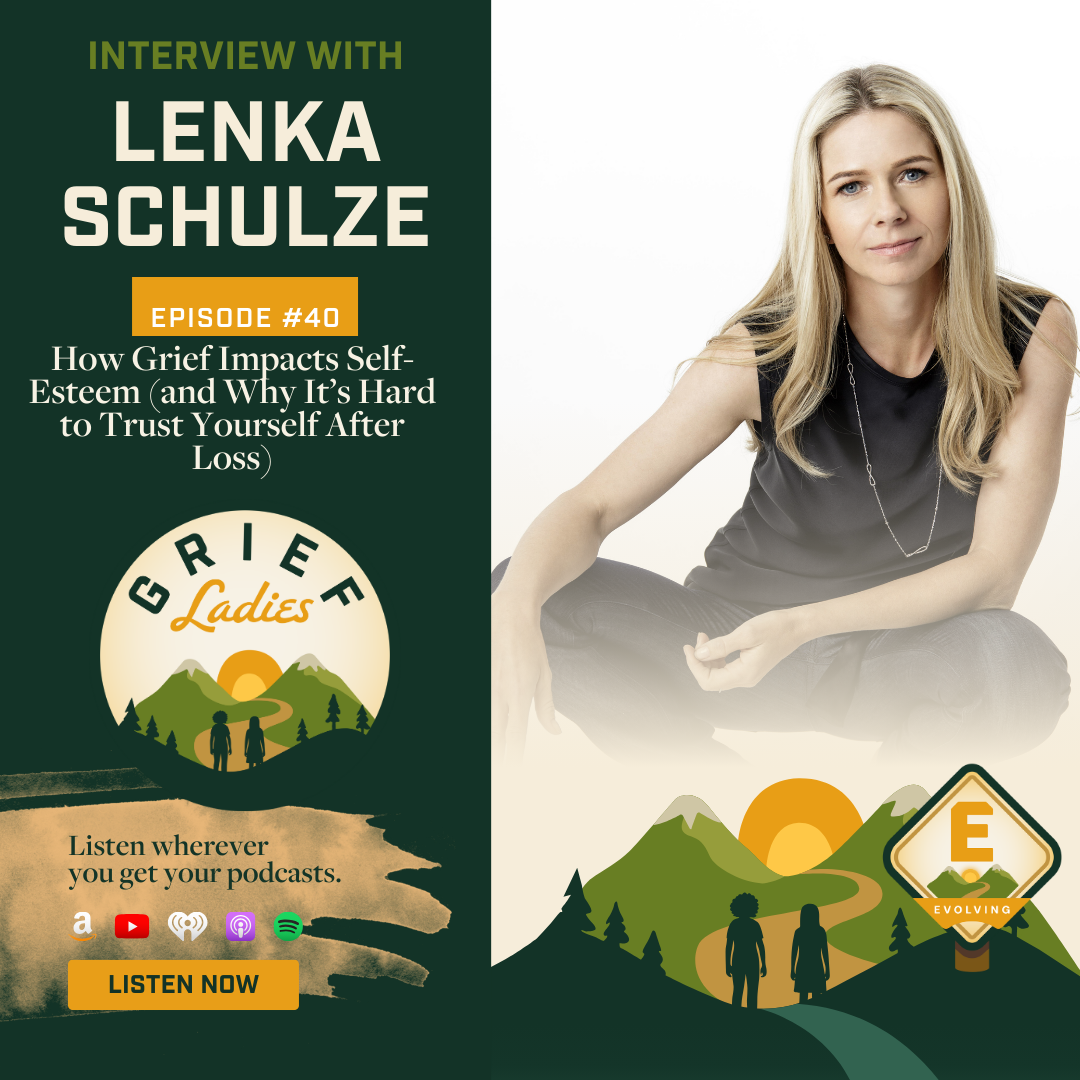
How Grief Impacts Self-Esteem (and Why It’s Hard to Trust Yourself After Loss)
How Grief Impacts Self-Esteem (and Why It’s Hard to Trust Yourself After Loss)
How Grief Impacts Self-Esteem (and Why It’s Hard to Trust Yourself After Loss)
Grief doesn’t just break your heart — it can shake your confidence.
In this episode, we explore how loss impacts self-esteem, identity, and your ability to trust your own intuition. Joined by Dr. Lenka Schulze, we discuss why grief can feel disorienting, how disenfranchised grief often goes unacknowledged, and why talking openly about death matters.
You’ll hear:
How grief affects self-confidence
Why trusting yourself may feel harder after loss
The connection between grief and physical health
Disenfranchised grief, including miscarriage
Rebuilding inner trust through surrender and awareness
Healing isn’t about rushing forward — it’s about reconnecting with yourself.
As always, we close with practical steps you can try this week.

Grief, Relationships, and Dating After Loss: What Nobody Tells You with Joëlle Lydon
Grief, Relationships, and Dating After Loss: What Nobody Tells You with Joëlle Lydon
When someone is deep in grief, the people closest to them often want to help — but don't know how. And the grieving person? They're often too exhausted to explain. In this episode, relationship coach and author Joelle Lydon breaks down what's really happening in relationships when grief enters the picture, how both partners can navigate it without losing each other, and what dating after loss actually looks like.
Joelle talks about the power of making clear and specific requests, why partners often inadvertently short-circuit the grief process by trying to fix things too quickly, and her concept of the sacred third — the relationship itself as something both people contribute to or take away from. She also dives into dating after loss — why transparency beats strategy, why dating is a sorting process not a search, and how companionship can look very different than you'd expect.
Plus: a beautiful in-the-moment insight about honoring a friend through daily "marquee moments" at the dinner table.

Sorting a Loved One's Belongings: Clinical Considerations and Grief-Informed Support
Sorting a Loved One’s Belongings: Clinical Considerations and Grief-Informed Support
Belongings, Meaning, and the Complexity of Letting Go
When a person dies, their physical possessions become something more than objects. They become containers for memory, relationship, and identity — both the deceased's and the bereaved person's. The sweater that still carries a scent. The handwriting on a grocery list. The reading glasses left on a nightstand. These items carry relational weight that has nothing to do with their material value, and the decisions surrounding them can become some of the most emotionally loaded tasks a bereaved person faces.
For helping professionals, understanding why belongings hold such significance after loss — and why decisions about them can be so difficult — is a meaningful component of grief-informed care. The process of sorting, keeping, distributing, and releasing a loved one's possessions is not a logistical task that happens alongside grief. For many bereaved individuals, it is grief work itself.
In this episode of the GRIEF Ladies podcast, certified grief coach and TEDx speaker Charlene Lam joins hosts Kelly Daugherty and Rox to discuss the emotional and practical dimensions of managing a loved one's belongings after death. Drawing on her Curating Grief® framework and her book of the same name, Charlene brings a structured, creative, and clinically relevant perspective to a topic that is frequently underaddressed in bereavement support contexts.
What This Episode Covers
The conversation addresses several areas with direct relevance to professionals supporting bereaved individuals:
Why physical possessions carry such concentrated emotional and relational meaning after a death
How guilt functions in the context of decisions about belongings — and what it is actually communicating
Frameworks for approaching decisions about what to keep, what to release, and what to transform — without imposing timelines or external pressure
Why there is no clinically or personally correct timeline for sorting through a loved one's possessions
Creative approaches to honoring memory and maintaining continuing bonds without retaining every physical item
Clinical and Systemic Implications
The management of a deceased person's belongings sits at the intersection of grief, identity, continuing bonds, and practical life reorganization. It is a dimension of bereavement that receives relatively little attention in clinical training, despite being a near-universal experience for bereaved individuals and a frequent source of distress in the months and years following a death.
Several clinical and systemic considerations are worth naming directly.
Belongings function as physical anchors for continuing bonds. Continuing bonds theory — the understanding that maintaining an ongoing connection to the deceased is a normative and often adaptive aspect of grief — helps explain why releasing possessions can feel threatening rather than freeing. For many bereaved individuals, objects are not reminders of the person who died. They are part of how the relationship continues. Professionals who understand this framework are less likely to inadvertently pressure clients toward releasing items before they are ready, and more likely to help clients make decisions that honor their actual grief process.
Guilt around belongings is clinically meaningful data. When a bereaved person feels guilty about keeping something, releasing something, or simply not knowing what to do, that guilt warrants clinical attention rather than reassurance. It often reflects underlying beliefs about loyalty, love, identity, and what it means to move forward after loss. Exploring the content of the guilt — rather than rushing to resolve it — is more clinically useful and more respectful of the client's actual experience.
External pressure around belongings is a significant source of bereavement distress. Bereaved individuals frequently face pressure from family members, landlords, estate processes, and well-meaning friends to sort and clear a deceased person's belongings on a timeline that has nothing to do with their grief. This pressure is a form of disenfranchisement — it communicates that the grief process should be subordinate to practical or social convenience. Professionals who can name this dynamic and explicitly support a client's right to their own timeline provide meaningful advocacy within the bereavement support relationship.
Decisions about belongings can surface family conflict. When multiple bereaved family members have different relationships to the deceased's possessions — different timelines, different emotional attachments, different practical needs — conflict can emerge that complicates the grief of everyone involved. Therapists and family counselors who are not prepared for this dimension of bereavement may find themselves managing interpersonal conflict without the grief-informed context needed to navigate it effectively.
Creative approaches to belongings are underutilized in clinical settings. Transforming a loved one's clothing into a quilt, creating a memory box, digitizing photographs, or commissioning art from meaningful materials are all approaches that support continuing bonds while reducing the practical burden of retaining every item. These creative solutions are not just aesthetically meaningful — they are grief-informed interventions that help bereaved individuals maintain connection while also moving through the practical realities of loss. Professionals who are aware of these options can expand the support they offer significantly.
For children, a deceased person's belongings can be a significant grief resource. A parent's watch, a grandparent's recipe box, a sibling's favorite book — objects can serve as concrete, tangible points of connection for children who are still developing the cognitive and emotional capacity to hold loss in more abstract ways. School counselors and therapists working with bereaved children benefit from understanding how to incorporate meaningful objects into grief support, and how to help caregivers navigate decisions about children's access to a loved one's possessions.
Practical Applications for Helping Professionals
1. Assess where clients are in the process of managing belongings — without assuming. Some bereaved clients will raise this topic directly. Others will not, either because they have not connected it to their grief or because they are ashamed of where they are in the process. A simple, direct assessment question — "Have you had to deal with any of their belongings yet, and how has that been?" — opens the conversation without pressure and provides clinically useful information.
2. Normalize the absence of a timeline. One of the most useful things a professional can say to a bereaved client who is not ready to sort through belongings — or who sorted them quickly and is now second-guessing that decision — is that there is no correct timeline. Decisions about belongings are not a measure of grief health or forward progress. Clients need to hear this explicitly, because the external messages they are receiving often communicate the opposite.
3. Explore the meaning of specific objects rather than making general recommendations. Rather than offering advice about what to keep or release, help clients articulate what specific objects mean to them and what function they are serving. Is a particular item providing comfort? Maintaining connection? Creating distress? The object's function in the grief process is more clinically relevant than its practical value, and exploring that function provides a more useful basis for decision-making.
4. Address guilt directly and with curiosity. When guilt arises around belongings — whether about keeping, releasing, or simply not deciding — treat it as clinical material rather than a problem to be resolved. What does the client believe the guilt means? What would keeping or releasing this item say about their love, their loyalty, their grief? These questions often open into deeper grief work that would not have been accessible otherwise.
5. Introduce creative frameworks where appropriate. Clients who feel stuck between keeping everything and feeling overwhelmed, or releasing everything and feeling bereft, often benefit from a third option: transformation. Memory quilts, shadow boxes, commissioned artwork, digitized archives, and other creative approaches to belongings can be introduced as possibilities — not prescriptions — that expand the available options and reduce the binary pressure of keep or discard.
6. Support clients in setting limits with external pressure. Where clients are experiencing pressure from family members, estate processes, or social expectations to clear belongings on a timeline that is not their own, explicitly support their right to a different pace. Help them develop language for communicating their needs, identify what is and is not negotiable, and recognize that advocating for their own grief process is not selfishness — it is self-knowledge.
About the Guest: Charlene Lam
Charlene Lam is a certified grief coach, TEDx speaker, and the founder of The Grief Gallery. After her mother died suddenly in 2013, Charlene drew on her background as a curator to develop the Curating Grief® framework — a creative, accessible approach to navigating both the physical and emotional dimensions of loss. Her first book, Curating Grief: A Creative Guide to Choosing What to Keep After a Loved One Dies, is now available. Charlene's work offers bereaved individuals and the professionals who support them a structured, creativity-informed lens for one of grief's most practically complex challenges.
Resources from the Center for Informed Grief
The Center for Informed Grief provides training and professional development for therapists, educators, healthcare providers, and organizational leaders working with bereaved individuals. Our programs address grief-informed practice across its full scope — including the practical and relational dimensions of loss, continuing bonds, and building the professional capacity to support clients through the full complexity of bereavement.
To learn more about upcoming trainings, workshops, or consultation opportunities, visit the Center for Informed Grief.

Curating Grief: Choosing What to Keep, Release & Create After Loss
Curating Grief: Choosing What to Keep, Release & Create After Loss
Curating Grief: Choosing What to Keep, Release & Create After Loss
Belongings can hold more than memory — they can hold identity, connection, and unfinished emotion.
In this episode, Charlene Lamb shares her Curating Grief framework, inviting us to move beyond “keep or toss” and instead approach memory with intention.
We discuss:
The emotional meaning of personal items
Designing your ongoing relationship with the person who died
Reclaiming your narrative through choice
Creating something new from what remains
Why there’s no rush to decide\
Grief isn’t about erasing — it’s about evolving.
As always, we close with practical steps you can take in your own time.

Polyvagal Theory & Grief: Grounding Tools to Calm Your Nervous System
Polyvagal Theory & Grief: Grounding Tools to Calm Your Nervous System
Polyvagal Theory & Grief: Grounding Tools to Calm Your Nervous System
Grief isn’t just emotional — it’s physiological.
In this episode, 37 of the GRIEF Ladies Podcast, we explore how grief impacts the nervous system and why you may feel anxious, shut down, exhausted, or on edge. Joined by Gabrielle Juliano-Villani, we discuss polyvagal theory, grounding techniques, and practical tools to help regulate your body during grief.
You’ll hear:
How the nervous system responds to loss
Why burnout and grief often overlap
The role of self-compassion
What “glimmers” are and why they matter
Simple grounding practices you can try today
Grief can feel overwhelming — but small shifts in awareness can create meaningful change.
As always, we close with practical steps you can use this week.
Listen wherever you get your podcast or watch at: https://youtu.be/9Oig0ouNGCw?si=RGmKXDcBcJPji2I0

Who Am I Now? Finding Yourself After Loss
Who Am I Now? Finding Yourself After Loss
One of the most disorienting parts of grief is not just losing someone you love — it is losing the version of yourself that existed alongside them. Your roles change. Your sense of purpose shifts. The questions get bigger and harder to answer. In Episode 6 of the GRIEF Ladies Podcast, Karyn and Kelly close out the G.R.I.E.F. framework with Finding — the F — and what it actually means to search for yourself again after loss.
Why does grief make you question who you are?
So much of our identity is quietly built around the people in our lives. When someone dies, it is not just their presence that disappears — it is the roles you played together, the decisions you made as a unit, the parts of yourself that only existed in relation to them. Many grieving people describe feeling like they are starting over, like their life was one way and then in an instant looked completely different.
Kelly describes Finding as the intersection of three things: making sense of what happened, discovering what benefits — however small — have emerged from the experience, and reconstructing your identity. Who am I now? Where do I want to go? These are not questions with quick answers, and Karyn points out that in early grief, most people do not yet have the capacity to answer them at all. That is normal. Finding tends to come after the acute weight of early grief has had some time to settle.
Meaning-making — including sense-making, benefit-finding, and identity reconstruction — is one of the most well-supported frameworks in contemporary grief research. Studies show that people who are able to find some meaning in their loss over time report lower levels of grief-related distress and greater long-term well-being. (Sources: Park, C.L. — meaning-making model; bereavement and post-traumatic growth literature)
What Karyn and Kelly are clear about: you do not have to force meaning. And you do not have to find it on a timeline. But staying curious about the question — who am I now, and who do I want to be? — is itself a form of progress.
Is it realistic to want to be happy again?
Karyn offers a reframe in this episode that is worth sitting with: happiness is not the goal. Not because happiness does not matter, but because it is fleeting and unreliable even in the best of times. Chasing happiness as a grief benchmark sets people up to feel like they are failing when the feeling does not hold.
What she focuses on instead is peace. Contentment. A sense of things feeling slightly more predictable, slightly more tolerable than yesterday. A client Kelly has carried with her since 2008 said it plainly: "I don't want to be happy. I just want to be neutral." Neutral meaning peaceful. Calm. Grounded. That, she said, felt sustainable in a way that happiness did not.
The episode closes with a story Karyn tells about a man who asked her, "What difference does it make?" — a question that can stop a grief counselor cold if you're not ready for it. Her answer is one of the most honest and useful things in this episode, and it is worth hearing in her own words.
Listen to Karyn answer that question — and hear what she and Kelly believe is possible when you actually do the work: Listen to Episode 6 of the GRIEF Ladies Podcast → LINK: https://youtu.be/qd4XfdkR14o?si=U7Kn_XzInnO8fTVW
Keep Reading
Is It Normal to Feel Angry, Guilty, and Resentful When You're Grieving? → LINK: https://youtu.be/x3BKKoWBPv4?si=yZ_iVe_io9kfsC6b — Episode 5 on the complex emotions that can keep you stuck.
What Is the G.R.I.E.F. Framework and How Does It Work? → LINK: https://youtu.be/_0ld4dnUT7I?si=65dD-m5k3n60cD3z— An overview of all five pillars: Grounding, Rebuilding, Interacting, Evolving, and Finding.

What Should You Do When You're Grieving? 5 Experts Share One Action Step Each
5 Action Steps to Help You on Your Grief Journey
Grief can make it hard to know where to start. Each expert in this post is a guest from the GRIEF Ladies Podcast, and each one was asked a single question: what is one actionable step a grieving person can take right now? Their answers span every letter of the GRIEF Ladies framework — and together, they give you a place to begin.
G · Grounding: What can you do when grief is keeping you up at night?
Sleep is one of the first things grief disrupts — and one of the hardest to reclaim. Dr. Larissa Tate, a clinical psychologist specializing in sleep, anxiety, and trauma, shares that grief sleep disturbances are not a personal failing. They are a physiological response to loss, and there are evidence-based tools to address them.
Dr. Tate's action step: start with your sleep environment and your wind-down routine before reaching for medication. Small, consistent changes — what time you go to bed, how much light you're exposed to in the evening, what you do in the hour before sleep — can create meaningful shifts over time.
📊 Stat: Research shows that bereaved individuals are significantly more likely to experience insomnia than the general population, with some studies indicating rates as high as 40–50% among the newly bereaved. Sleep disruption can worsen emotional regulation, concentration, and physical health — making it one of the most important areas to address early in grief.
🎙️ Listen to the full episode with Dr. Larissa Tate on sleep and grief
R · Rebuilding: How do you support a child who is grieving?
Children grieve differently than adults, and they often need adults to help them rebuild a sense of safety and routine after a loss. Jennifer joined us to talk about what children actually need when someone they love has died — and what the adults around them can do to help.
Her action step: don't wait for a child to bring it up. Create space for the conversation by naming what happened directly and age-appropriately. Children take cues from the adults around them. When adults are willing to talk about death, children learn that their feelings are safe to share.
🎙️ Listen to the full episode with Jennifer on children and grief
I · Interacting: How does a funeral director help families communicate during grief?
Grief changes every relationship — and the days immediately following a death can bring out both the best and the most complicated parts of family dynamics. Brittany DeMarco-Furman, a fourth-generation licensed funeral director at Glenville Funeral Home, has guided hundreds of families through those first hours and days.
Her action step: have the conversation before you need to. Pre-planning a funeral — or even just talking openly about end-of-life wishes — is one of the most loving things a family can do for each other. It removes the burden of guessing during the hardest moments, and it opens a door for honest communication about what matters.
💬 Quote: "It's the last gift you can give your family." — Brittany DeMarco-Furman
🎙️ Listen to the full episode with Brittany DeMarco-Furman on family communication and grief
E · Evolving: What do you do when grief emotions feel impossible to sit with?
The emotions that show up in grief — anger, guilt, fear, regret — can feel like walls rather than doorways. Holly McNeill, known as The Mindfulness Architect, developed the P.E.R.L.O.V.E. Formula after her own experience of profound personal loss. Her work focuses on helping people understand how their minds function under stress so they can engage with pain more consciously.
Her action step: pause before you react to a difficult emotion. You don't have to fix the feeling or push it away — just notice it. Mindfulness isn't about becoming calm; it's about becoming curious. That small shift from reaction to observation can change your entire relationship to the emotion.
📊 Stat: Studies on mindfulness-based interventions for grief have found reductions in grief-related rumination and increases in psychological flexibility among bereaved participants. The ability to observe emotions without being consumed by them is a trainable skill — not a personality trait.
🎙️ Listen to the full episode with Holly McNeill on mindfulness and grief
F · Finding: How do you grieve a pet when no one around you understands?
Pet loss is one of the most common forms of disenfranchised grief — grief that isn't fully recognized or validated by others. Adam Greenbaum created Love Baxter, the world's largest pet end-of-life resource, after the death of his Boston Terrier, Baxter, in October 2024. His episode is a reminder that the grief you feel for an animal is not small, and you don't have to explain it to anyone.
His action step: find your people. Seek out communities — online or in person — where pet loss is taken seriously and your grief is welcome. Isolation makes grief harder. Connection, even with strangers who understand, makes it more bearable.
🎙️ Listen to the full episode with Adam Greenbaum on pet loss and finding connection
One framework. Five action steps. A place to begin.
The GRIEF Ladies framework — Grounding, Rebuilding, Interacting, Evolving, and Finding — was built on the understanding that grief touches every part of life. There is no single right place to start. But there is always somewhere. The five guests in this post each offer one small, real step you can take in the area of grief that feels most pressing for you right now.
we

Coping with Pet Loss: Grieving a Beloved Dog & Preparing for End of Life
Coping with Pet Loss: Grieving a Beloved Dog & Preparing for End of Life
Coping with Pet Loss: Grieving a Beloved Dog & Preparing for End of Life
Losing a pet can feel devastating — and yet pet grief is often minimized or misunderstood.
In this episode, Adam Greenbaum shares the story of losing his Boston Terrier, Baxter, and how that experience led him to create Love Baxter, a resource supporting pet owners through end-of-life decisions and bereavement.
We discuss:
Why pet loss is often disenfranchised grief
Preparing for a pet’s end of life
The emotional toll of euthanasia decisions
Ways to celebrate and memorialize your pet
Finding support during pet bereavement
Our pets are companions, family, and witnesses to our lives. Their loss matters.
As always, we close with practical steps you can take during your own grief journey.

Why Does Grief Make You Feel Like You've Lost Yourself?
Why Does Grief Make You Feel Like You've Lost Yourself?
One of the least talked-about effects of grief is what it does to your sense of self. The qualities you relied on — your ability to make decisions, stay organized, show up for people, feel capable — can feel completely out of reach when you are grieving. This is not a personal failing. It is one of grief's most disorienting effects, and in Episode 5 of the GRIEF Ladies Podcast, Karyn and Kelly explain why self-esteem in grief deserves far more attention than it typically gets.
How does grief affect self-esteem?
Grief changes the way you see yourself — sometimes in ways you do not even notice until you are already deep in the cycle. You are not as productive as you used to be. Decisions feel impossible. You feel foggy, unmotivated, unlike yourself. And then you feel bad about feeling that way, which makes it harder to get things done, which makes you feel worse. Karyn describes it as a loop that is very easy to fall into and very hard to climb out of without understanding what is actually happening.
Part of what makes this so destabilizing is how much of our identity is tied to the people in our lives. The person who died may have been the one who told you that you looked good, talked you through hard decisions, or simply believed in you in ways you took for granted. When they die, those things disappear too — and you may not even realize how much of your sense of self was quietly held up by their presence.
Identity disruption — the loss of roles, relationships, and self-perception tied to the deceased — is consistently identified in bereavement research as a core feature of grief, distinct from depression. Rebuilding a coherent sense of self is considered a central task of adaptation after loss. (Sources: Bonanno, G.; identity and meaning-making in bereavement literature)
What can you do when you no longer recognize yourself?
The first step, Karyn and Kelly say, is simply noticing — without judgment. What thoughts are you having about yourself? Where do you feel like you are falling short? What story are you telling yourself about who you are now and what you did or didn't do? Most of the time these thoughts are running on autopilot, and awareness is what makes it possible to interrupt them.
The harder truth is that you do not have to believe everything you think. The story grief tells about you is not the whole truth — but it takes time, and often the right support, to start seeing that clearly.
Karyn and Kelly talk through what this looks like in practice, and what tools can actually help, in the full episode: Listen to Episode 5 of the GRIEF Ladies Podcast → LINK: https://youtu.be/x3BKKoWBPv4?si=6AAFU7TkA0U-RMjN
Keep Reading
Is It Normal to Feel Angry, Guilty, and Resentful When You're Grieving? → LINK: — The first half of this topic: the "ugly" emotions of grief and why they are more normal than you think.
Why Do Relationships Feel So Different After Someone Dies? → LINK: — Episode 4 on navigating the relationships that shift after loss.
What Is the G.R.I.E.F. Framework and How Does It Work? → LINK: — An overview of all five pillars and the thinking behind this approach.
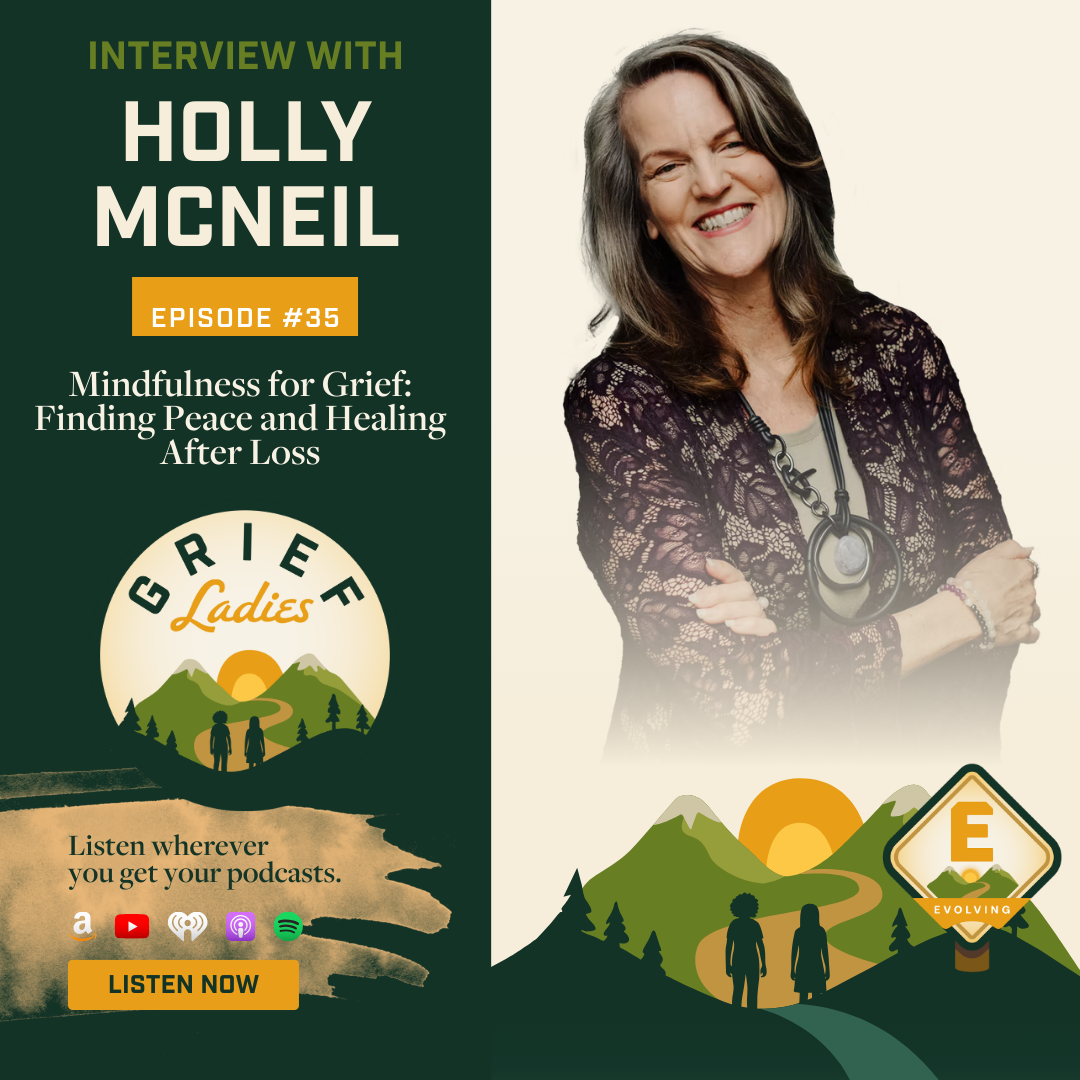
Mindfulness for Grief: Finding Peace and Healing After Loss
Mindfulness for Grief: Finding Peace and Healing After Loss
Mindfulness for Grief: Finding Peace and Healing After Loss
Grief can pull you into the past or push you into fear about the future. Mindfulness invites you back to the present moment.
In this episode, we talk with Holly McNeill about how meditation and mindful awareness can support healing after loss. We explore the PUR-LOVE framework, the role of gratitude in grief, and how acceptance helps create peace — even when life feels shattered.
You’ll hear:
How mindfulness changes your relationship with grief
Why meditation builds emotional resilience
The connection between gratitude and healing
How to practice presence during pain
Healing through grief is not about forgetting — it’s about learning to be here now.
As always, we close with practical steps you can try this week.

Is It Normal to Feel Angry, Guilty, and Resentful When You're Grieving?
Is It Normal to Feel Angry, Guilty, and Resentful When You're Grieving?
Yes — and not only is it normal, these emotions are part of how grief actually works. Anger at the person who died. Guilt over things said or left unsaid. Resentment toward people whose lives seem untouched by loss. These are some of the most common experiences grieving people have, and some of the least talked about. In Episode 5 of the GRIEF Ladies Podcast, Karyn and Kelly name them directly — and explain why they deserve your attention rather than your shame.
What are the "ugly" emotions of grief and why do they show up?
Karyn and Kelly call them the derailers: guilt, anger, regret, and resentment. They show up in all kinds of ways. You might find yourself furious at a doctor, or quietly resentful when a friend complains about their parents who are still alive, or stuck replaying a moment when you lost patience with the person who died. And then — almost immediately — comes the guilt for feeling any of it.
What makes these emotions so hard to navigate is that they rarely travel alone. They tangle together. You feel angry at your loved one for dying and then guilty for the anger. You feel resentment and then shame about the resentment. Karyn notes she has yet to meet a grieving person who didn't carry some level of guilt — regardless of how present, devoted, or close they were to the person who died.
Research on self-compassion and grief suggests that self-critical thought patterns — including guilt and shame — are among the most significant predictors of prolonged grief. Practices that reduce self-judgment have been shown to improve grief outcomes over time. (Sources: Neff, K. — self-compassion research; bereavement and complicated grief literature)
Do these emotions serve a purpose, or are they just keeping you stuck?
Both — and that tension is exactly what makes them so hard to work through. Karyn is clear in the episode: these emotions are not pointless. They are not a sign that something is wrong with you. Kelly describes how guilt and anger can sometimes function as a distraction from the core sadness underneath, which can feel even more painful to sit with. In that way, the "ugly" emotions are actually doing something — even when what they're doing is keeping you from moving forward.
The goal is not to get rid of them. It is to understand them well enough that they stop running the show. Feelings and thoughts are not facts, as Kelly says — but in the middle of grief, that loop is very hard to break without the right support and tools.
Karyn and Kelly go deeper on all of this in the full episode, including what it actually looks like to start untangling these emotions: Listen to Episode 5 of the GRIEF Ladies Podcast → LINK: https://youtu.be/x3BKKoWBPv4?si=6AAFU7TkA0U-RMjN
Other GRIEF Ladies Podcast Episodes:
Why Does Grief Affect the Way You See Yourself? → LINK: https://youtu.be/x3BKKoWBPv4?si=evcw3fEEpnDbg_cs — The second half of this topic: how grief impacts self-esteem and what to do about it.
Why Do Relationships Feel So Different After Someone Dies? → LINK: https://youtu.be/ZK6kiFNrImw?si=99YDK6U5nGKMaLAb — Episode 4 on navigating expectations, loneliness, and the relationships that shift after loss.
What Is the G.R.I.E.F. Framework and How Does It Work? → LINK: https://youtu.be/_0ld4dnUT7I?si=Aj2xmYBprpzckm6g — An overview of all five pillars and the thinking behind this approach.
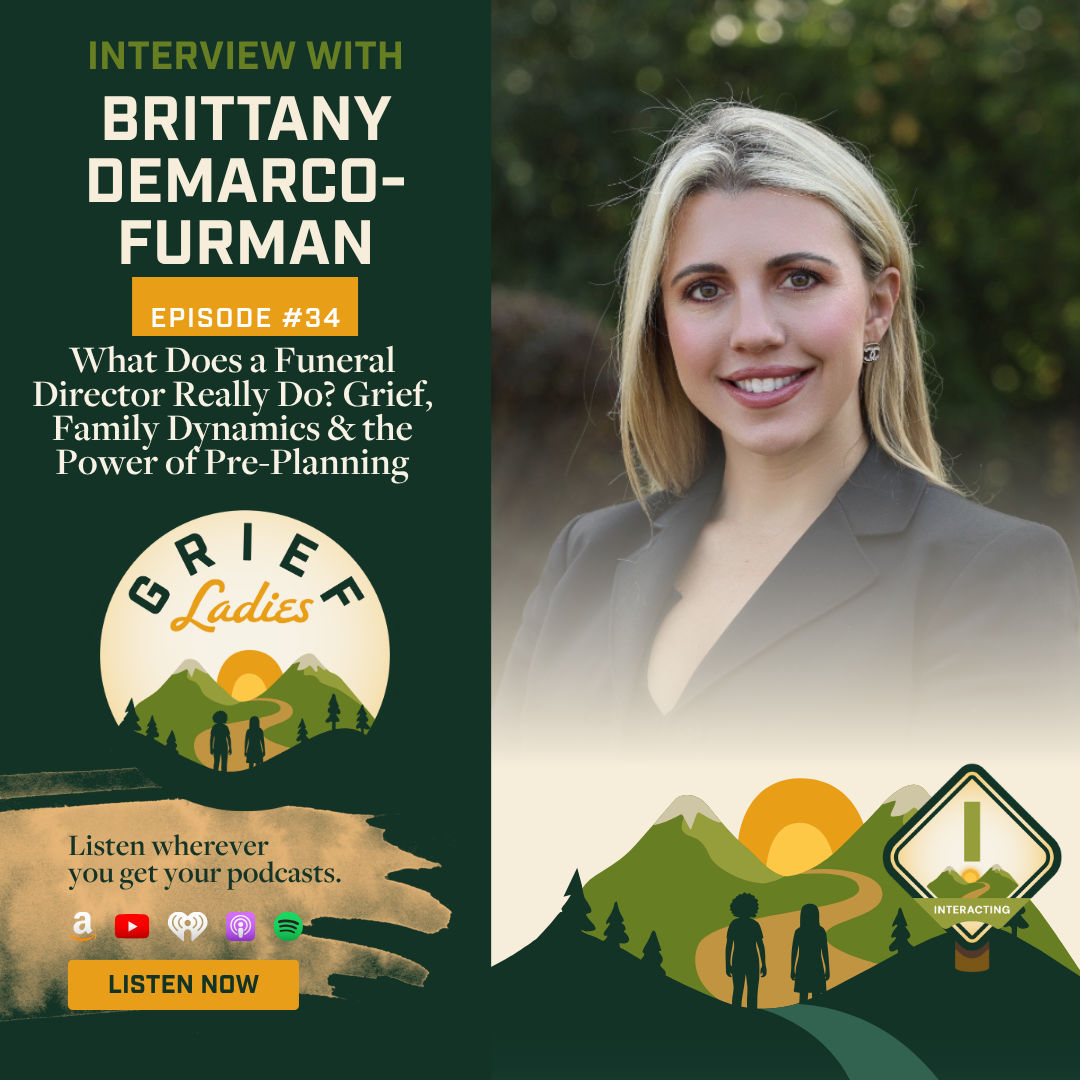
What Does a Funeral Director Really Do? Grief, Family Dynamics & the Power of Pre-Planning
What Does a Funeral Director Really Do? Grief, Family Dynamics & the Power of Pre-Planning
What does it really mean to be there for a family in their most vulnerable moment? In this episode of the Grief Ladies podcast, Karyn and Kelly sit down with Brittany DeMarco-Furman, a licensed funeral director, to explore the deeply human side of the funeral industry.
Brittany opens up about why interacting with grieving families is at the heart of everything she does — and how meaningful connection can make all the difference during one of life's hardest chapters. From the importance of pre-planning as a final gift to your loved ones, to navigating complicated family dynamics, to creating personalized memorials that truly honor a life lived — this conversation is full of wisdom, warmth, and practical guidance.
You'll also hear how music, storytelling, and community support can become powerful tools for healing, and why it's never too late to hold a service or celebrate a legacy.
In this episode, you'll learn:
Why pre-planning your funeral relieves stress for the people you love most
How funeral directors support families as guides, not just service providers
Creative ways to honor and celebrate a loved one's life
Why open conversations about death are an act of love
How sharing stories and memories can be part of the healing process
"It's the last gift you can give your family." — Brittany DeMarco-Furman
Whether you're in the midst of grief, supporting someone who is, or simply want to be better prepared, this episode reminds us that honoring a life well-lived is one of the most healing things we can do.
Listen here: https://open.spotify.com/episode/3CsgIP7w58wV0IJ87OhgkK?si=b8fbb8e22b294a23

Why Do Relationships Feel So Different After Someone Dies?
Why Do Relationships Feel So Different After Someone Dies?
Grief changes you — and that means it changes every relationship around you too. The people you expected to show up may disappear, the things people say can sting even when they mean well, and you can feel completely alone in a room full of people who love you. In Episode 4 of the GRIEF Ladies Podcast, Karyn and Kelly dig into Interacting — the I (Interacting) in the G.R.I.E.F. framework — and why navigating relationships is one of the most exhausting and least talked-about parts of grief.
Why does grief feel so lonely even when people are around?
One of grief's cruelest paradoxes is that loneliness often hits hardest when you are surrounded by people. You may be at a family gathering, or a work event, or even a dinner with close friends, and feel completely disconnected — like you landed on a different planet and everyone around you is speaking a language you no longer understand.
Part of this is the sheer amount of change happening inside you. Your priorities shift. The things that used to matter feel trivial. A teenager Kelly worked with put it plainly after her mother died: she couldn't understand why her friends were upset about things that seemed so small. "When am I going to start caring about things like my friends do again?" she asked. The answer is yes — eventually. But in grief, that gap between where you are and where everyone else seems to be can feel impossibly wide.
Studies on bereavement consistently identify social isolation and loneliness as among the most significant risk factors for complicated grief. Unlike most human needs — if you're tired, you sleep; if you're hungry, you eat — loneliness in grief is not reliably solved by being around people. (Sources: bereavement and social support research literature; Journal of Affective Disorders)
And unlike hunger or fatigue, being with people does not automatically fix the loneliness of grief. That is why understanding how to navigate relationships — who gives you energy, who drains it, what you actually need — matters so much.
What do you do when people say the wrong thing or don't show up the way you hoped?
Unmet expectations are one of the most common sources of pain in grief — and most of the time, you do not even realize you had an expectation until it goes unmet. Someone you counted on goes quiet. A family member pushes a timeline on your grief. A friend says your loved one "is in a better place" when what you needed was for them to just sit with you.
Karyn and Kelly are honest in the episode: there are no magic words. What grieving people are really looking for is not the perfect thing to be said — it is grace, patience, and the feeling of not being rushed. And the harder truth is that educating the people around you, communicating what you need, often falls on you at the very moment you have the least capacity for it.
What helps more than any script? Using their loved one's name. Showing up consistently over time, not just in the first week. Asking rather than assuming.
Karyn and Kelly go much deeper on this in the full episode — including what came up in a grief group Karyn led the same day they recorded: Listen to Episode 4 of the GRIEF Ladies Podcast → LINK: https://youtu.be/ZK6kiFNrImw?si=1u2wZNT_PixBs6bY
Other GRIEF Ladies Podcast Episodes:
Why Does Structure Matter When You're Grieving? → LINK:https://youtu.be/wbJVX3Q2iv8?si=IR2rxj4DtA93nnzq — Episode 3 covers Rebuilding: how routine and small daily anchors help when grief has scattered everything.
What Are the "Ugly" Emotions of Grief No One Talks About? → LINK: https://youtu.be/x3BKKoWBPv4?si=e3TwQT_4HrKme4xA — Episode 5 moves into Evolving: anger, guilt, regret, and the impact of grief on self-esteem.
What Is the G.R.I.E.F. Framework and How Does It Work? → LINK: https://youtu.be/_0ld4dnUT7I?si=dWA5HIuyht01E0bs — An overview of all five pillars and the thinking behind this approach.