

Loneliness and Grief
Grief and Loneliness
Why Do I Feel So Alone? Why Does No One Understand Me?
We hear this all the time:
“I can be in a room surrounded by friends and family and still feel completely alone.”
After someone dies, many people begin to question:
Does anyone actually understand what I’m going through?
Do people even recognize me anymore?
Why do I feel so different from everyone else?
Why does it feel like the world moved on, and I didn’t?
This kind of loneliness is one of the most painful parts of grief.
Loss changes you. It changes how you see the world. It can shift your priorities, your tolerance for small talk, your patience, your energy. You may find that conversations feel surface-level. You may not have the capacity to pretend you’re okay. You may feel like people expect you to “be back to normal.” That disconnect can create a deep sense of isolation even when you’re not physically alone.
In the early days after a death, support is usually visible. Meals are dropped off. Messages are constant. Cards come in the mail. People check in. But as weeks and months pass, the outside world often quiets down as they go back to their everyday lives and the reality of the loss sinks in for you. Your grief may still feel intense, but fewer people are asking how you’re doing. The lack of support can feel frustrating, confusing and painful.
It can lead to thoughts like:
Maybe I should be further along.
Maybe I’m too much for them. I don’t want to be a burden.
Maybe people are tired of hearing about me talk about him/her.
Most of the time, people aren’t intentionally pulling away. They simply don’t know what to say or how to stay present in someone else’s pain.
You Are Not the Only One Who Feels This Way:
Feeling lonely in grief does not mean you are weak or dramatic. It’s a common experience.
Many grieving people say that the most relieving moment is hearing someone else describe exactly what they’ve been thinking but were afraid to say out loud.
What Can Help With Grief and Loneliness?
You can’t force everyone to understand your grief. But you can:
Seek spaces like the GRIEF Ladies Facebook Community, where grief is openly discussed
Identify one or two people who feel safe to be honest with
Allow yourself to step back from conversations that feel draining
Connect with others who are also living with loss in a grief group
Loneliness in grief is common. It doesn’t mean you are broken. It means you are carrying something significant. And you deserve spaces where your grief is understood.

How to Live with Loss
How to Live with Loss from the death of a loved one
Many people search for this in the middle of the night:
How do I get over this?
How do I move on?
How do I make this stop hurting?
The truth is, grief is not something you get over. It’s something you learn to live with.
In the Beginning, Grief Can Take Over Everything
In the first few days, weeks, and even months following the death of a loved one, grief often feels overwhelming. It can impact:
Your sleep
Your focus
Your relationships
Your work
Your sense of identity
Your ability to plan for the future
It can feel like grief is touching every part of your life at once. When you're feeling that it’s common to want relief and fast.
As you move forward, grief often looks and feels different. It may not dominate every moment of your day. The waves may become less constant. You may find ways to function, to laugh again, to engage in life. That doesn’t mean the grief is gone.
It means you are growing around it.
Some people describe it this way: your grief doesn’t necessarily shrink, but your life begins to expand. You grow bigger than your grief. There is more room inside you for joy, connection, purpose, and memory alongside the pain.
The love is still there. The loss is still real. But it isn’t consuming every breath.
So What Actually Helps?
You don’t “get over” a loss by forcing yourself to move on. You learn to live with it by:
Developing coping skills for when waves hit
Rebuilding routines and structure
Learning how to talk about your grief
Finding ways to stay connected to the person who died
Allowing both hard emotions and moments of relief
This is the kind of practical, real-life approach we focus on inside the GRIEF Ladies Facebook Community, a place where people share what it’s really like to live with loss and support one another through it.
There is no deadline for healing. There is no requirement to “be done” with your grief. Learning to live with loss is a gradual process. And it’s okay if you’re still in the part where it feels heavy. You are not behind. You are grieving.

Is My Grief Normal?
Is My Grief Normal?
Many grieving individuals worry if what they are feeling is normal, or if what they’re feeling is too much, not enough, or somehow wrong. This is one of the most common questions people ask after the death of someone they love.
In grief groups, we constantly hear:
“I am going to say something that might sound crazy, but…”
“I feel like I’m losing my mind.”
And almost every time, heads nod around the room in agreement
The reality is that while grief is unique, many grieving individuals experience similar reactions.
Common and normal grief symptoms include:
Grief brain (forgetfulness, brain fog, difficulty concentrating)
Grief Bursts: sudden waves of emotion or tears “out of nowhere.”
Physical symptoms like headaches, stomach aches, a tight chest, or extreme exhaustion
Sleep changes- extreme exhaustion, trouble falling or staying asleep
Increased anxiety or irritability
Feeling disconnected from friends and family
Deep loneliness
Questioning your faith or worldview
Feeling okay one moment and a complete mess the next
These are all very normal reactions, and this list could go on and on. Grief does not move through predictable stages. It does not follow a straight timeline. It often comes in waves, and there is no timeline for how long this will last.
If you want to hear real conversations about what grief actually feels like, including grief brain, triggers, and why waves happen, we talk openly about this on the GRIEF Ladies podcast, where we normalize the parts of grief people are often afraid to say out loud. Check out new episodes every Wednesday, which is available on all major podcast platforms and YouTube at: GRIEF Ladies - YouTube
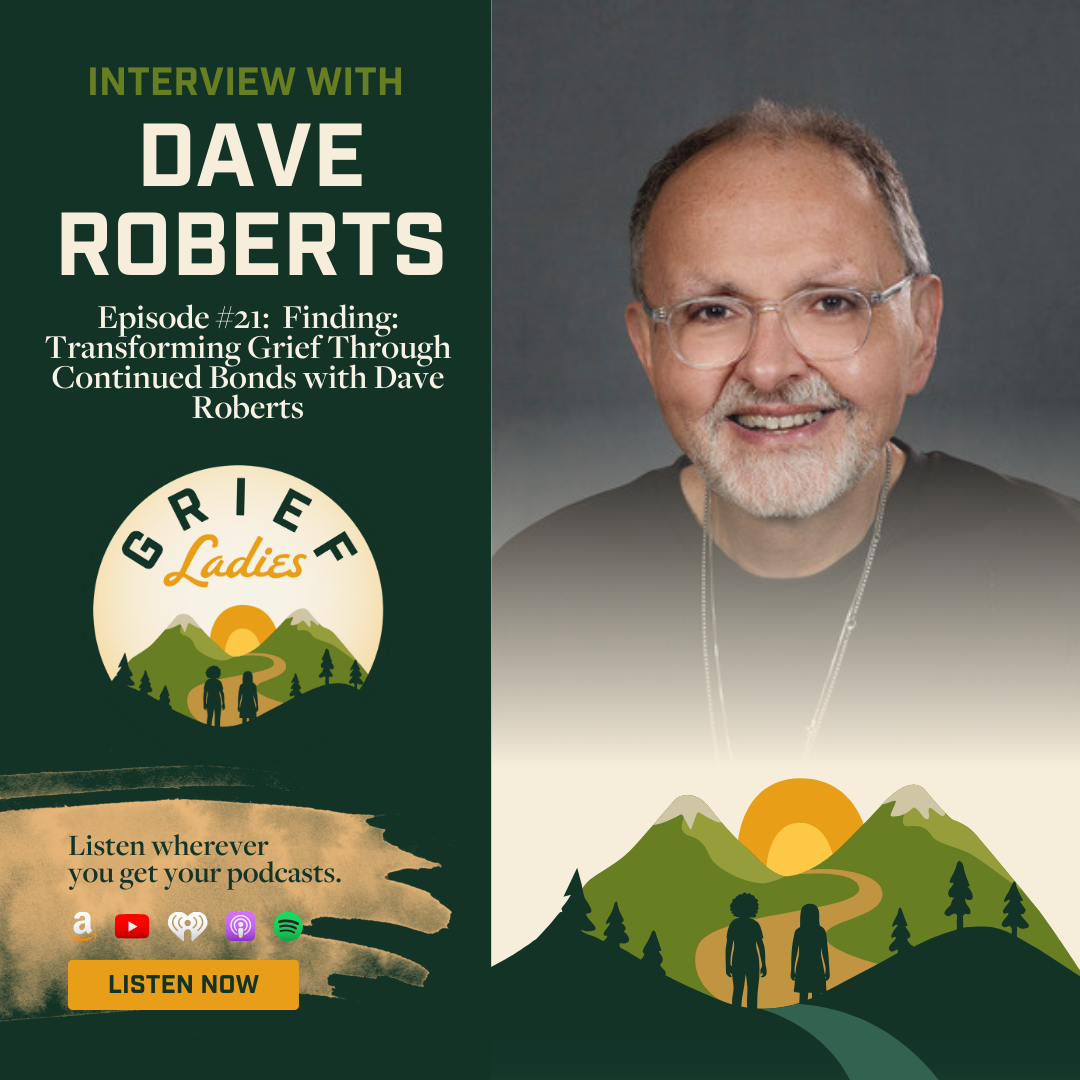
Finding: Transforming Grief Through Continued Bonds with Dave Roberts
GRIEF Ladies Podcast Episode #21 with Dave Roberts
New Podcast Episode: 2/11/26
In this episode of the GRIEF Ladies podcast, hosts Kelly Daugherty and Karyn Arnold welcome Dave Roberts to discuss the concept of continued bonds in grief.
They explore practical strategies for maintaining connections with deceased loved ones, the importance of shadow work, and how to find meaning in grief.
The conversation emphasizes the evolving nature of grief, the significance of celebrating the lives of loved ones, and offers practical advice for navigating the grief journey.
Listen on all major podcast platforms and YouTube at: https://youtu.be/enkLhjcheHk?si=lsfdQLSshEKasJjU

Family Support While Grieving: Why It Can Feel So Complicated
Family Support While Grieving: Why It Can Feel So Complicated by Karyn Arnold
By Karyn Arnold, one of the GRIEF Ladies from Grief In Common
For many people, family support while grieving quickly becomes the hardest place to feel steady after loss — and that can come as a real surprise.
They knew the person. They loved them too. Surely this would be the place where support came most naturally. This was supposed to feel familiar, or at least steady. When that doesn’t happen, the disappointment can run deep. People are often left wondering why something they counted on no longer feels there.
What follows often goes beyond frustration. Loneliness sets in. A sense of safety disappears. A quiet worry creeps up: Is something broken in my family now? Is this how it’s always going to feel?
Family Support While Grieving Isn’t Shared in the Same Way
One of the biggest sources of tension in grieving families comes from the belief that everyone is mourning the same loss.
Even when the person is the same, the loss is not.
A partner loses the person they built daily life with.
A child loses a parent.
A sibling loses shared history.
The day-to-day impact also differs, especially for the family member(s) who shared living space with the person who is gone.
Grief becomes harder when we expect one another to cope, feel, or recover in similar ways — or on the same timeline. When no one names those expectations, misunderstandings grow quickly.
When the Struggle Isn’t Just With the Family You Were Born Into
For some, the strain shows up with parents or siblings. For others, it hits closer to home.
A spouse may want things to “get back to normal.” Children may feel uncomfortable with your sadness. Loved ones may rush, minimize, or avoid grief because they don’t know how to sit with it.
The sense of isolation can grow when you aren’t feeling supported or understood in your own home, and some of the disappointment can feel greatest with the family we chose.
When Support Comes From Somewhere Unexpected
Many grieving people feel surprised when they start leaning more on friends, coworkers, or people outside their family.
That shift can feel unsettling.
Often, it has less to do with love and more to do with capacity. Family members are grieving too. They may feel overwhelmed or emotionally flooded. Someone a step outside the inner circle may simply have more room to listen or stay steady.
This is why finding grief support outside the family matters so much.
When Grief Strains — or Breaks — the Family System
Sometimes these changes stay quiet. Other times, they explode.
Grief exposes old dynamics, unresolved conflicts, and long-standing family roles. Disagreements can escalate fast, especially around money, the estate, or decision-making. When that happens, it can feel like the loss fractured the family itself.
Here’s what matters: conflict during grief does not mean a family is permanently broken. It means the system is under extreme strain.
Why We Talk About Family Support While Grieving
This is one of many reasons Karyn Arnold and Kelly Daugherty came together to create the GRIEF Ladies.
Together, they bring nearly 50 years of professional grief experience, supporting people through the loss of spouses, parents, siblings, and complicated family relationships. The GRIEF Ladies includes a website, podcast, Facebook community, upcoming book series, and ongoing grief education.
Family strain is only one part of the work — but it is a deeply painful one.
Again and again, people ask the same question:
Why does this hurt so much with the people who matter most?
How the GRIEF Framework Helps When Family Support Falls Apart
Family conflict is just one way grief shows up, but it highlights something important. You cannot fix or change anyone else. You cannot undo what happened.
What you do have is the present — and yourself within it.
The GRIEF framework guides where your time, energy, and attention can go when everything feels out of control. It offers clear direction for caring for yourself in ways that actually help.
G — Grounding
Grief affects the nervous system and the body, not just emotions. When family support while grieving feels unreliable, many people ignore basic needs to hold everything together.
Grounding means caring for yourself as an individual, even during family stress.
Sleep, food, focus on breath, and movement matter more than most people expect. Supporting your body helps stabilize your emotions when everything else feels shaky.
R — Rebuilding
Loss disrupts routines, roles, and identity. Family systems once revolved around the person who is gone. Now everyone is adjusting.
Rebuilding structure and boundaries helps you stay steadier during difficult interactions. Even small routines create predictability when everything feels unfamiliar — including your family.
I — Interacting
Interacting focuses on how grief changes communication and connection.
It includes naming needs, understanding that everyone grieves differently, and keeping expectations realistic. It also means making space for hard conversations that help preserve relationships as they shift.
Sometimes a simple, “I’m having a hard time — how about you?” opens more ground than silence ever could.
E — Evolving
Grief brings emotions many people don’t expect: anger, guilt, regret, resentment. These feelings often show up in families, where history runs deep.
You may feel angry about decisions, resentful of behavior, or hurt by how your loved one was treated. These reactions can feel uncomfortable or even shameful.
They are also normal.
Anger often sits right beside sadness. These feelings need somewhere to go. Talking with a trusted friend, journaling, or joining a grief group helps release what builds up inside. You don’t have to act on every thought — but you don’t need to carry them alone.
F — Finding
Loss raises questions without quick answers: Who am I now? What does my family look like? Where do I find support?
Finding doesn’t mean resolving everything. It means noticing what supports you now and letting that be enough for the moment.
Rather than deciding what your family will look like forever, focus on what helps you get through today and this week. Support can take new forms without meaning something has been lost for good.
This Isn’t (or Doesn’t Have To Be) How It Will Always Be
That fear — that your family is broken or that things will always feel this strained — is common.
It also isn’t the full story.
Families change under the weight of grief. Sometimes painfully.
With understanding, realistic expectations, and support that doesn’t rely on one person to carry everything, those bonds can survive — and sometimes even strengthen.
Work With Us
If struggles with family support while grieving feel familiar, this is just one example of the challenges the GRIEF framework was built to help with.
In their work as the GRIEF Ladies, Karyn Arnold and Kelly Daugherty see grief show up in many ways — identity, routine, motivation, self-worth, relationships, and the question of how to live after loss.
The GRIEF framework offers structure when grief feels chaotic. It helps you put limited energy into places that support you, instead of trying to manage everything — or everyone — at once.
Through the GRIEF Ladies podcast, support offerings, video series, and upcoming book, the framework is explored in greater depth with practical tools you can return to as grief continues to change.
The goal is steady support — something to come back to when you feel overwhelmed, uncertain, or unsure what to do next.
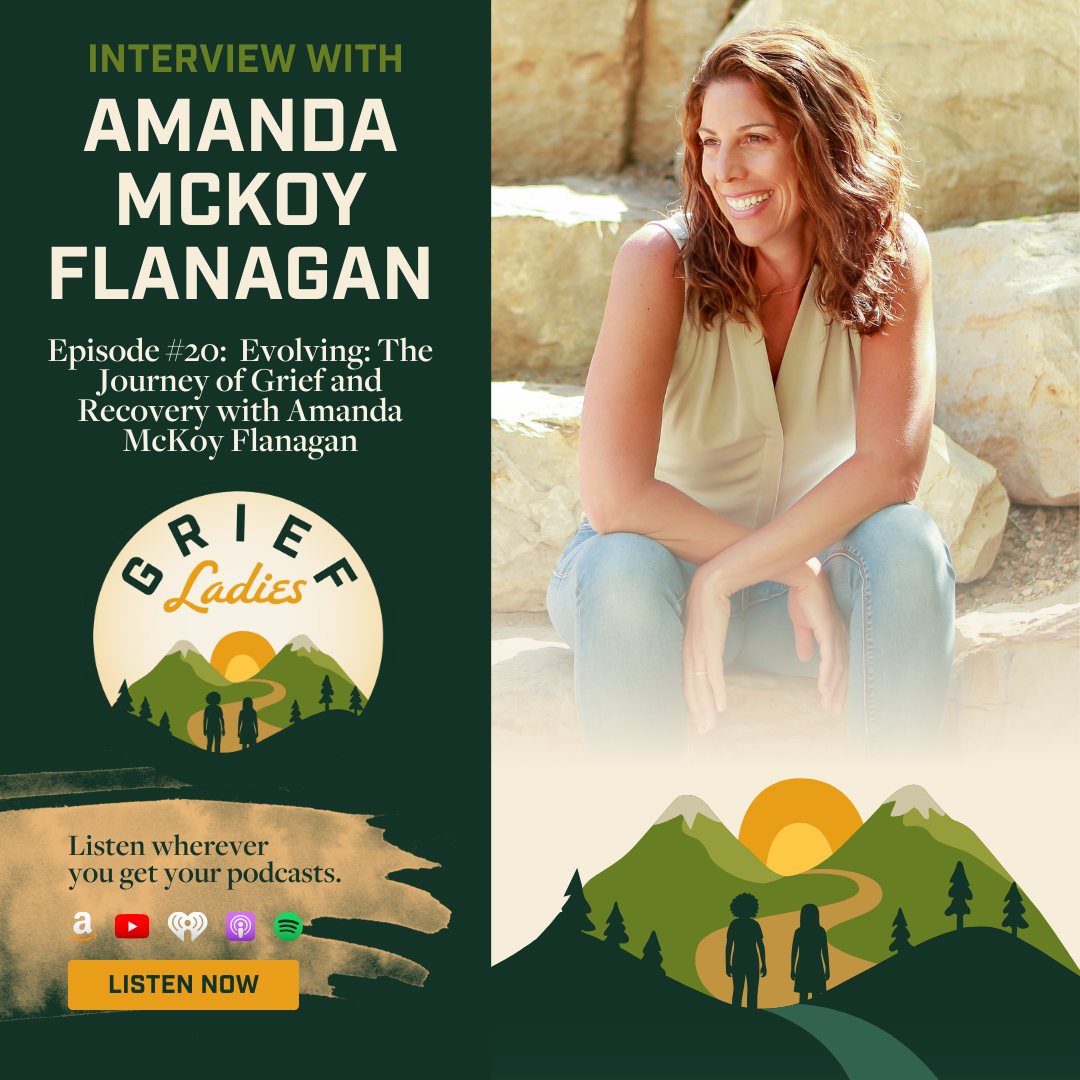
Evolving: The Journey of Grief and Recovery with Amanda McKoy Flanagan
Evolving with Amanda McKoy Flanagan
In this episode of the GRIEF Ladies podcast, Karyn Arnold and Kelly Daugherty engage with Amanda McKoy Flanagan, a certified intuitive loss and empowerment coach, to explore the complexities of grief and loss.
Amanda shares her personal journey through grief, including the impact of significant losses in her life and how she maintained her sobriety amidst these challenges.
The conversation delves into coping mechanisms, the importance of connection in recovery, and actionable steps for those navigating grief.
Amanda emphasizes the significance of celebrating the lives of loved ones and maintaining connections while also encouraging listeners to practice self-compassion and reach out to others
Listen to it wherever you get your podcasts and on YouTube at: https://youtu.be/jm4jN2JEfdQ?si=utOFdfmNt5rU-Niq