
How Does Grief Affect Your Body — And What Can You Do About It?
How Grief Affects Your Body — and What Helps | GRIEF Ladies Podcast
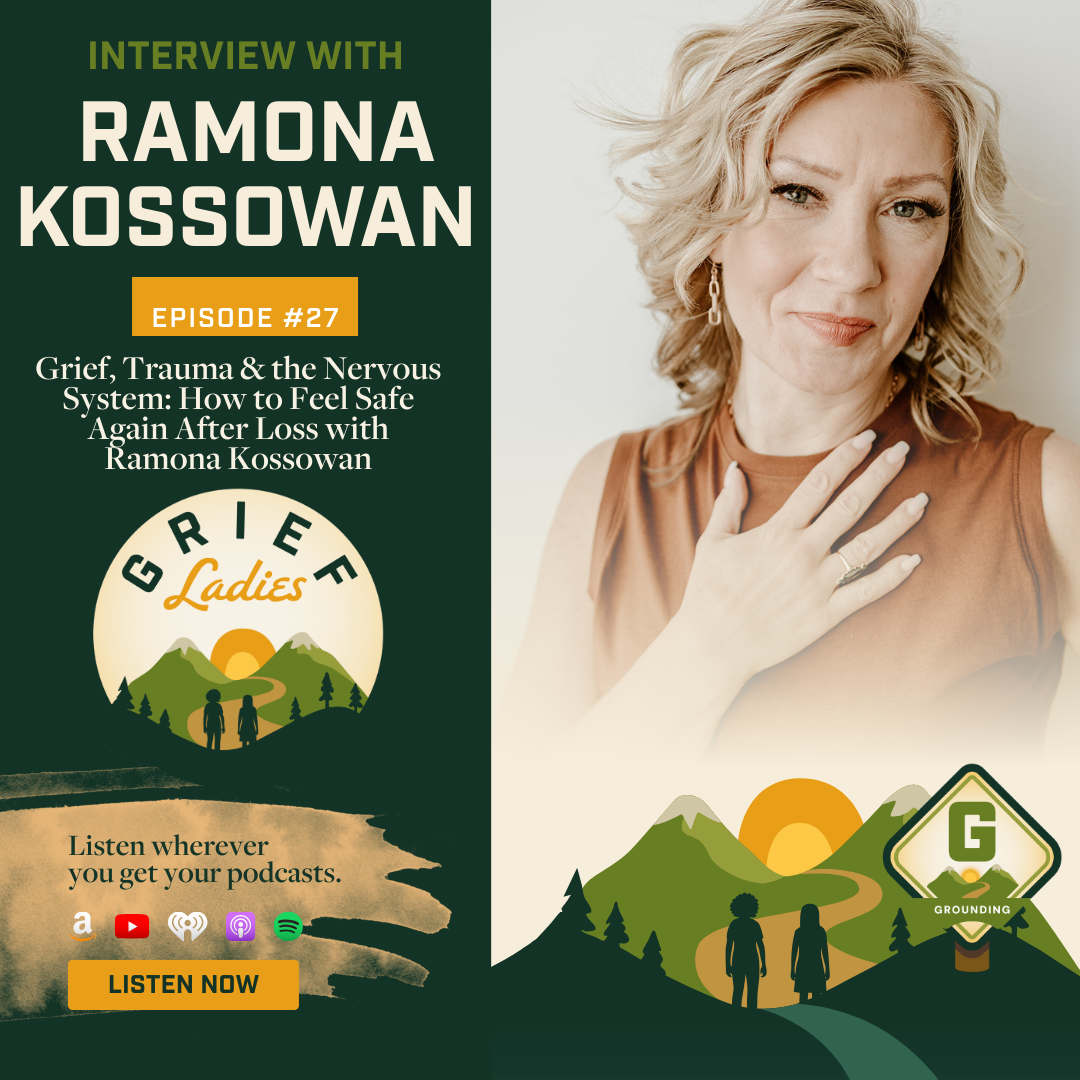
Grief doesn't just live in your mind — it lives in your body, and your nervous system experiences loss as a threat to safety. The short answer to what helps: gentleness, not force. In this episode of the GRIEF Ladies Podcast, Kelly and Karyn are joined by gentle trauma release practitioner and personal empowerment coach Ramona Kossowan to talk about what's really happening in the body during grief, and what actually helps.
Why Does Grief Feel So Physical?
Sleep disruption, digestive issues, pain, a complete loss of identity — these aren't separate from grief, they're part of it. Ramona explains that trauma and grief live in the nervous system, not just in our thoughts. When we experience significant loss, our sense of safety is threatened, and the body responds accordingly. Most people don't recognize this as trauma — especially when a death was anticipated or happened after a long illness. But as Ramona points out, elements of shock exist no matter what, and the caregiving experience itself can leave lasting imprints on the nervous system.
Research published in Psychosomatic Medicine found that bereaved individuals show measurable changes in immune function, cardiovascular stress response, and sleep architecture — confirming that grief's impact on the body is biological, not just emotional.
What Actually Helps the Body Feel Safe Again?
This is where the episode gets practical. Ramona's approach — rooted in polyvagal theory — focuses on sending the nervous system cues of safety rather than pushing through or forcing progress. That can look like a warm breakfast eaten slowly, gentle movement outdoors, time with people who don't require you to perform okay-ness, or working with someone trained to help the nervous system process what it's been holding.
She also names something not enough people hear: a person can be well-meaning and still not be emotionally safe for you right now. That's not a judgment — it's useful information about what your body needs.
The episode includes Ramona's own grief story, which adds depth and honesty to everything she shares about why this work matters.
Listen to the full episode for Ramona's accessible explanation of polyvagal theory, what a gentle trauma release session actually looks like, and her specific guidance on movement and body-based coping skills during grief.

Why am I still grieving so intensely months/years later?
Why am I still grieving so intensely months/years later?
Many people quietly wonder:
Why does this still hurt so much?
Shouldn’t I be feeling better by now?
Is something wrong with me?
Why am I still grieving years later?
There’s a lot of pressure in our culture to “be okay” after a certain amount of time. But grief doesn’t follow a calendar or timeline. Grief is not something you get over. It’s something you learn to live with.
Intensity Doesn’t Always Mean Something Is Wrong
Even months or years later, grief can feel intense. Grief waves can still show up unexpectedly. Certain dates, memories, or life events can bring everything back to the surface. This just means your loss mattered.
Grief can feel especially intense or long-lasting when:
The death was sudden or traumatic
There were complicated relationship dynamics
You didn’t get closure
You were very closely connected
The loss significantly changed your daily life or your identity
When a death was traumatic, some people don’t just miss the person, they relive aspects of how the death happened. They may experience intrusive memories, mental images, or a sense of being pulled back into the moment they found out. That kind of grief can feel more challenging and difficult to move forward with.
Over time, many people find that grief shifts. It may not dominate every hour of the day. But it doesn’t vanish.
You might function well most days and still have moments when it feels raw. You might laugh more and still miss them deeply. You may build a full life and still carry the absence.
Both things can be true.
Growing around grief doesn’t mean it’s gone. It means your life has expanded enough to hold it.
When to Consider Additional Support:
There is no “correct” timeline. But it may be helpful to seek professional support if:
The intensity feels constant with little relief
You are frequently reliving the death itself
Intrusive memories or images feel overwhelming
You feel stuck in guilt, anger, or despair
You are unable to function in daily life
You feel hopeless or unsafe
Seeking support is not about labeling your grief. It’s about helping you carry it in a way that feels more manageable. Check out Grief in Common with Karyn Arnold for additional resources, including grief groups or grief coaching.