

Why We Called It "How to Grieve with Love Instead of Pain"
The GRIEF Ladies Guide: How to Grieve with Love Instead of Pain
The title came from something we see again and again - in our 50 years of combined experience supporting grieving individuals.
People come to us believing, sometimes without even realizing it, that the pain is the point. That suffering is proof of love. That if the grief isn't hurting, something is wrong. That moving forward means moving away from the person who died.
We wanted to write a book that gently pushed back on all of that.
Here's what we believe: your connection to the person you lost shouldn't have to live in suffering.
That doesn't mean grief isn't painful. It is. It will be. Nothing about loving someone and losing them makes that pain disappear. We're not here to tell you otherwise.
But pain and love are not the same thing. And while pain may always be part of your story, it doesn't have to be your last or lasting connection to the person you lost. We want that forever connection to be about love.
The book names something we see at the heart of why so many grieving people stay stuck:
"Sometimes we hold on to these roadblocks because of our sense of love and loyalty. To be a loving person is to suffer. What kind of person would I be if I didn't feel bad?"
That belief keeps people from moving forward more than almost anything else we see. And it makes complete sense. If the pain is how you stay connected, letting go of the pain can feel like letting go of them.
It isn't. And this book is our attempt to help you feel that.
This book is built for the people we wrote about in the dedication:
"The stuck ones. The terrified ones. The numb ones. The angry ones. The ones barely holding on. The ones doing it awkwardly. The ones questioning every instinct and second-guessing themselves at every turn. The people trying to rebuild a life that no longer feels familiar, while carrying more than anyone around them can see."
That's who this book is for.
Available Tuesday, September 29th on Amazon.

What Should You Do When You're Grieving? 5 Experts Share One Action Step Each
5 Action Steps to Help You on Your Grief Journey
Grief can make it hard to know where to start. Each expert in this post is a guest from the GRIEF Ladies Podcast, and each one was asked a single question: what is one actionable step a grieving person can take right now? Their answers span every letter of the GRIEF Ladies framework — and together, they give you a place to begin.
G · Grounding: What can you do when grief is keeping you up at night?
Sleep is one of the first things grief disrupts — and one of the hardest to reclaim. Dr. Larissa Tate, a clinical psychologist specializing in sleep, anxiety, and trauma, shares that grief sleep disturbances are not a personal failing. They are a physiological response to loss, and there are evidence-based tools to address them.
Dr. Tate's action step: start with your sleep environment and your wind-down routine before reaching for medication. Small, consistent changes — what time you go to bed, how much light you're exposed to in the evening, what you do in the hour before sleep — can create meaningful shifts over time.
📊 Stat: Research shows that bereaved individuals are significantly more likely to experience insomnia than the general population, with some studies indicating rates as high as 40–50% among the newly bereaved. Sleep disruption can worsen emotional regulation, concentration, and physical health — making it one of the most important areas to address early in grief.
🎙️ Listen to the full episode with Dr. Larissa Tate on sleep and grief
R · Rebuilding: How do you support a child who is grieving?
Children grieve differently than adults, and they often need adults to help them rebuild a sense of safety and routine after a loss. Jennifer joined us to talk about what children actually need when someone they love has died — and what the adults around them can do to help.
Her action step: don't wait for a child to bring it up. Create space for the conversation by naming what happened directly and age-appropriately. Children take cues from the adults around them. When adults are willing to talk about death, children learn that their feelings are safe to share.
🎙️ Listen to the full episode with Jennifer on children and grief
I · Interacting: How does a funeral director help families communicate during grief?
Grief changes every relationship — and the days immediately following a death can bring out both the best and the most complicated parts of family dynamics. Brittany DeMarco-Furman, a fourth-generation licensed funeral director at Glenville Funeral Home, has guided hundreds of families through those first hours and days.
Her action step: have the conversation before you need to. Pre-planning a funeral — or even just talking openly about end-of-life wishes — is one of the most loving things a family can do for each other. It removes the burden of guessing during the hardest moments, and it opens a door for honest communication about what matters.
💬 Quote: "It's the last gift you can give your family." — Brittany DeMarco-Furman
🎙️ Listen to the full episode with Brittany DeMarco-Furman on family communication and grief
E · Evolving: What do you do when grief emotions feel impossible to sit with?
The emotions that show up in grief — anger, guilt, fear, regret — can feel like walls rather than doorways. Holly McNeill, known as The Mindfulness Architect, developed the P.E.R.L.O.V.E. Formula after her own experience of profound personal loss. Her work focuses on helping people understand how their minds function under stress so they can engage with pain more consciously.
Her action step: pause before you react to a difficult emotion. You don't have to fix the feeling or push it away — just notice it. Mindfulness isn't about becoming calm; it's about becoming curious. That small shift from reaction to observation can change your entire relationship to the emotion.
📊 Stat: Studies on mindfulness-based interventions for grief have found reductions in grief-related rumination and increases in psychological flexibility among bereaved participants. The ability to observe emotions without being consumed by them is a trainable skill — not a personality trait.
🎙️ Listen to the full episode with Holly McNeill on mindfulness and grief
F · Finding: How do you grieve a pet when no one around you understands?
Pet loss is one of the most common forms of disenfranchised grief — grief that isn't fully recognized or validated by others. Adam Greenbaum created Love Baxter, the world's largest pet end-of-life resource, after the death of his Boston Terrier, Baxter, in October 2024. His episode is a reminder that the grief you feel for an animal is not small, and you don't have to explain it to anyone.
His action step: find your people. Seek out communities — online or in person — where pet loss is taken seriously and your grief is welcome. Isolation makes grief harder. Connection, even with strangers who understand, makes it more bearable.
🎙️ Listen to the full episode with Adam Greenbaum on pet loss and finding connection
One framework. Five action steps. A place to begin.
The GRIEF Ladies framework — Grounding, Rebuilding, Interacting, Evolving, and Finding — was built on the understanding that grief touches every part of life. There is no single right place to start. But there is always somewhere. The five guests in this post each offer one small, real step you can take in the area of grief that feels most pressing for you right now.
we

Grief Support That Actually Helps: Meet the Grief Ladies
Grief Support That Actually Helps: Meet the Grief Ladies
Most people who are grieving have heard the same things: there’s no right way to grieve, give it time, let yourself feel it. And while there is truth in all of that, it leaves out the most important question — what do you actually do?
That is the question behind The Grief Ladies podcast. Hosts Kelly Daugherty, LCSW, and Karyn Arnold bring over 50 combined years of experience supporting grieving individuals — and in Episode 1, they introduce themselves, share what drew them to this work, and lay out the GRIEF framework that will guide the entire series.
Kelly’s path into grief work began at 14, after the death of her mother, when she walked into a hospice grief group and finally felt less alone. Karyn found her way in through bereavement work with seniors in her mid-20s — and never looked back. Together, they share a belief that grief is not something to simply endure. There are real tools, practical steps, and small shifts that can make a meaningful difference.
In this episode, you’ll hear about the GRIEF framework — a step-by-step approach covering Grounding, Rebuilding, Interacting, Evolving, and Finding — and why moving forward does not mean leaving your loved one behind. It means taking them with you.
▶️ Listen to Episode 1: https://youtu.be/_0ld4dnUT7I?si=89da5nbDXHa9KOmZ

What Actually Helps: 5 Practical Grief Coping Tools from Real People
What Actually Helps: 5 Practical Grief Coping Tools from Real People
Nobody hands you a manual when someone dies.
You're just supposed to figure it out. And most of the advice out there?
It's vague, it's generic, and honestly — it doesn't help.
That's why I love asking our GRIEF Ladies guests to share one practical
coping tool that has actually made a difference in their grief journey.
Not theory. Not platitudes. Just real, actionable steps from real people
who are living it.
5 Guests. 5 Real Coping Tools.
I pulled the actionable steps from five recent episodes and put them
together in one video — because sometimes you just need something
concrete to try.
💛 Featured guests:
- Kelly Myerson (Ep. 22)
- Kat Farace (Ep. 23)
- Charlotte Shuber (Ep. 24)
- Cori Myka (Ep. 25)
- April Hannah (Ep. 26)
Watch it here: https://youtu.be/qpig6OP0Uvk
Your Turn
After you watch, comment on the video. What is one coping tool that has helped you in your grief? Drop it in the comments — your answer
might be exactly what someone else in this community needs today.
And if you want to hear the full story behind each coping tool, the complete episodes are linked below.
🎙️ Full Episodes:
Watch the full episodes:
Link to Ep. 22: https://youtu.be/Oj5HF0xuHhU?si=MU5oBHHuILkhZt6
Link to Ep. 23: https://youtu.be/xRevq_ZcDYo?si=9Pl3DTUQXpJa20Ww
Link to Ep. 24: https://youtu.be/5OEe88S1Sk4?si=ZhPOnLbf6OJr0BXN
Link to Ep. 25: https://youtu.be/aiLqrtJuFI8?si=PuS0JThk4BY43s1m
Link to Ep. 26: https://youtu.be/bTayMPCvKYY?si=gMWPaAyvhobg_VJH
You're not alone in this. And you don't have to figure it out by yourself. Join the Facebook Community: https://www.facebook.com/share/g/1Ak2yus1cW/

What Learning to Swim Taught Us About Grief — with Cori Myka | GRIEF Ladies Ep. 25
what-learning-to-swim-taught-us-about-grief-cori-myka
What could learning to swim possibly have to do with grief?
More than you'd think.
In Episode 25 of GRIEF Ladies: A Guide to What Comes Next, we welcomed Cori Myka, founder of Calm Within Adult Swim, and the conversation took
a turn we didn't expect — in the best possible way.
Fear. Overwhelm. Not Knowing What Comes Next.
Cori works with adults who are terrified of the water. And as she started describing what her clients experience — the fear, the overwhelm,
the pressure to get it right — we couldn't help but notice how much it sounded like grief.
Because grief puts you in a whole new world too. One where you don't know the rules, you don't know what's coming, and everyone around you
seems to expect you to just figure it out.
Cori shared a powerful framework for slowing all of that down — and it turns out it works whether you're standing at the edge of a pool or
standing at the edge of a whole new life without someone you love.
The Takeaway You Can Try Right Now
One of our favorite moments in this episode was when Cori shared a simple, practical tool you can use anywhere — in a meeting, in a grocery
store line, at a family gathering — when a grief wave hits and you need to come back to yourself.
It's small. It's tangible. And it just might help.
You'll have to listen to get the full details. 🎧
Plus — Cori Shares Something Personal
We also asked Cori how she celebrates those who have died in her own life. Her answer was beautiful, unexpected, and something that stuck
with us long after we stopped recording.
Listen to Episode 25 here: https://youtu.be/aiLqrtJuFI8
Connect with Cori:
📲 @CalmWithinAdultSwim
Have you ever found an unexpected connection between something in your life and your grief? Tell us in the comments of the video — we'd love to hear it.

GRIEF & YOUR ENERGY
Grief and Your Energy
Why grief feels exhausting… and what helps
Have you noticed grief makes everyday tasks feel harder?
You may feel:
• Mentally drained
• Emotionally overwhelmed
• Socially exhausted
• Physically tired
You are not imagining this.
Grief requires a huge amount of nervous system energy.
Many grieving people worry:
“I should be able to handle more.”
But grief is heavy.
Imagine carrying an invisible backpack filled with memories, emotions, and change… all day long.
Of course you get tired.
This is where ENERGY MAPPING can help.
Energy mapping helps you notice:
✔ What drains your energy
✔ What restores your energy
✔ What feels meaningful but still exhausting
✔ How to pace yourself in grief
Some experiences have TWO types of energy cost:
Physical Energy: How much effort your body uses
Emotional Energy: How much grief or stress it activates
Both matter.
Examples:
Talking about your loved one
💛 Meaningful
⚡ Emotionally draining
Family gatherings
💛 Important
⚡ Physically and emotionally tiring
Resting afterward is not weakness.
It is support.
Try this simple reflection:
👉 After I do __________
👉 My body usually feels __________
Awareness helps you plan care instead of pushing through exhaustion.
One helpful strategy is called Recovery Pairing.
This means: Pair draining experiences with supportive ones.
Examples:
Grief ritual → quiet walk
Social event → alone time
Therapy session → calming music or journaling
Grief changes capacity.
Energy mapping helps you work WITH your capacity instead of fighting it.
Pacing grief is how many people survive it.
💬 Reflection Question:
What is one activity that drains your energy right now… and one that helps restore it?

5 Actionable Steps to Cope With Grief (The GRIEF Ladies Framework)
5 Tools to Help you Cope with your Grief
Grief changes everything—but you don’t have to feel stuck or powerless.
In this video, The GRIEF Ladies share 5 actionable steps you can take after loss, based on our GRIEF framework:
Grounding • Rebuilding • Interacting • Evolving • Finding
This compilation features insights from five powerful guest conversations on the GRIEF Ladies Podcast, offering practical tools to help you:
Feel more grounded when grief feels overwhelming
Rebuild routines and structure after loss
Navigate relationships and communication while grieving
Work through difficult emotions like guilt, anger, and fear
Stay connected to your loved one while discovering who you are now
Whether you’re newly bereaved or living with ongoing grief, these steps are designed to help you feel better now—without letting go of love or connection.
✨ Grief is not something to “get over.”
✨ You’re allowed to want relief and connection.
✨ Small actions can create meaningful change.
To watch the video of these 5 tools to help you on your grief journey visit: https://youtu.be/EqLGul_LcFs

Family Support While Grieving: Why It Can Feel So Complicated
Family Support While Grieving: Why It Can Feel So Complicated by Karyn Arnold
By Karyn Arnold, one of the GRIEF Ladies from Grief In Common
For many people, family support while grieving quickly becomes the hardest place to feel steady after loss — and that can come as a real surprise.
They knew the person. They loved them too. Surely this would be the place where support came most naturally. This was supposed to feel familiar, or at least steady. When that doesn’t happen, the disappointment can run deep. People are often left wondering why something they counted on no longer feels there.
What follows often goes beyond frustration. Loneliness sets in. A sense of safety disappears. A quiet worry creeps up: Is something broken in my family now? Is this how it’s always going to feel?
Family Support While Grieving Isn’t Shared in the Same Way
One of the biggest sources of tension in grieving families comes from the belief that everyone is mourning the same loss.
Even when the person is the same, the loss is not.
A partner loses the person they built daily life with.
A child loses a parent.
A sibling loses shared history.
The day-to-day impact also differs, especially for the family member(s) who shared living space with the person who is gone.
Grief becomes harder when we expect one another to cope, feel, or recover in similar ways — or on the same timeline. When no one names those expectations, misunderstandings grow quickly.
When the Struggle Isn’t Just With the Family You Were Born Into
For some, the strain shows up with parents or siblings. For others, it hits closer to home.
A spouse may want things to “get back to normal.” Children may feel uncomfortable with your sadness. Loved ones may rush, minimize, or avoid grief because they don’t know how to sit with it.
The sense of isolation can grow when you aren’t feeling supported or understood in your own home, and some of the disappointment can feel greatest with the family we chose.
When Support Comes From Somewhere Unexpected
Many grieving people feel surprised when they start leaning more on friends, coworkers, or people outside their family.
That shift can feel unsettling.
Often, it has less to do with love and more to do with capacity. Family members are grieving too. They may feel overwhelmed or emotionally flooded. Someone a step outside the inner circle may simply have more room to listen or stay steady.
This is why finding grief support outside the family matters so much.
When Grief Strains — or Breaks — the Family System
Sometimes these changes stay quiet. Other times, they explode.
Grief exposes old dynamics, unresolved conflicts, and long-standing family roles. Disagreements can escalate fast, especially around money, the estate, or decision-making. When that happens, it can feel like the loss fractured the family itself.
Here’s what matters: conflict during grief does not mean a family is permanently broken. It means the system is under extreme strain.
Why We Talk About Family Support While Grieving
This is one of many reasons Karyn Arnold and Kelly Daugherty came together to create the GRIEF Ladies.
Together, they bring nearly 50 years of professional grief experience, supporting people through the loss of spouses, parents, siblings, and complicated family relationships. The GRIEF Ladies includes a website, podcast, Facebook community, upcoming book series, and ongoing grief education.
Family strain is only one part of the work — but it is a deeply painful one.
Again and again, people ask the same question:
Why does this hurt so much with the people who matter most?
How the GRIEF Framework Helps When Family Support Falls Apart
Family conflict is just one way grief shows up, but it highlights something important. You cannot fix or change anyone else. You cannot undo what happened.
What you do have is the present — and yourself within it.
The GRIEF framework guides where your time, energy, and attention can go when everything feels out of control. It offers clear direction for caring for yourself in ways that actually help.
G — Grounding
Grief affects the nervous system and the body, not just emotions. When family support while grieving feels unreliable, many people ignore basic needs to hold everything together.
Grounding means caring for yourself as an individual, even during family stress.
Sleep, food, focus on breath, and movement matter more than most people expect. Supporting your body helps stabilize your emotions when everything else feels shaky.
R — Rebuilding
Loss disrupts routines, roles, and identity. Family systems once revolved around the person who is gone. Now everyone is adjusting.
Rebuilding structure and boundaries helps you stay steadier during difficult interactions. Even small routines create predictability when everything feels unfamiliar — including your family.
I — Interacting
Interacting focuses on how grief changes communication and connection.
It includes naming needs, understanding that everyone grieves differently, and keeping expectations realistic. It also means making space for hard conversations that help preserve relationships as they shift.
Sometimes a simple, “I’m having a hard time — how about you?” opens more ground than silence ever could.
E — Evolving
Grief brings emotions many people don’t expect: anger, guilt, regret, resentment. These feelings often show up in families, where history runs deep.
You may feel angry about decisions, resentful of behavior, or hurt by how your loved one was treated. These reactions can feel uncomfortable or even shameful.
They are also normal.
Anger often sits right beside sadness. These feelings need somewhere to go. Talking with a trusted friend, journaling, or joining a grief group helps release what builds up inside. You don’t have to act on every thought — but you don’t need to carry them alone.
F — Finding
Loss raises questions without quick answers: Who am I now? What does my family look like? Where do I find support?
Finding doesn’t mean resolving everything. It means noticing what supports you now and letting that be enough for the moment.
Rather than deciding what your family will look like forever, focus on what helps you get through today and this week. Support can take new forms without meaning something has been lost for good.
This Isn’t (or Doesn’t Have To Be) How It Will Always Be
That fear — that your family is broken or that things will always feel this strained — is common.
It also isn’t the full story.
Families change under the weight of grief. Sometimes painfully.
With understanding, realistic expectations, and support that doesn’t rely on one person to carry everything, those bonds can survive — and sometimes even strengthen.
Work With Us
If struggles with family support while grieving feel familiar, this is just one example of the challenges the GRIEF framework was built to help with.
In their work as the GRIEF Ladies, Karyn Arnold and Kelly Daugherty see grief show up in many ways — identity, routine, motivation, self-worth, relationships, and the question of how to live after loss.
The GRIEF framework offers structure when grief feels chaotic. It helps you put limited energy into places that support you, instead of trying to manage everything — or everyone — at once.
Through the GRIEF Ladies podcast, support offerings, video series, and upcoming book, the framework is explored in greater depth with practical tools you can return to as grief continues to change.
The goal is steady support — something to come back to when you feel overwhelmed, uncertain, or unsure what to do next.
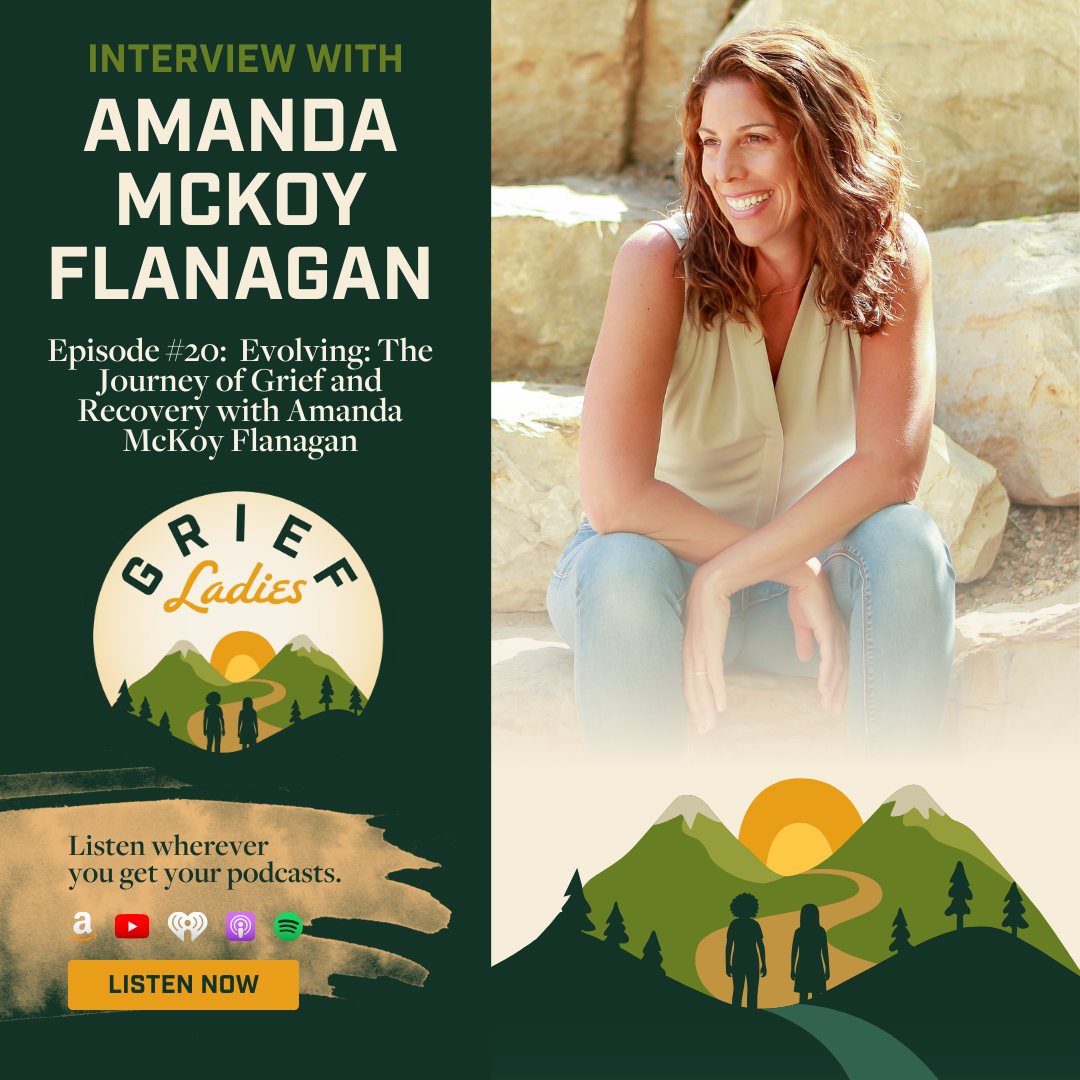
Evolving: The Journey of Grief and Recovery with Amanda McKoy Flanagan
Evolving with Amanda McKoy Flanagan
In this episode of the GRIEF Ladies podcast, Karyn Arnold and Kelly Daugherty engage with Amanda McKoy Flanagan, a certified intuitive loss and empowerment coach, to explore the complexities of grief and loss.
Amanda shares her personal journey through grief, including the impact of significant losses in her life and how she maintained her sobriety amidst these challenges.
The conversation delves into coping mechanisms, the importance of connection in recovery, and actionable steps for those navigating grief.
Amanda emphasizes the significance of celebrating the lives of loved ones and maintaining connections while also encouraging listeners to practice self-compassion and reach out to others
Listen here: https://open.spotify.com/episode/6IcWPY6BaHFCmFuatlRelE?si=64acefdeaa96451b