
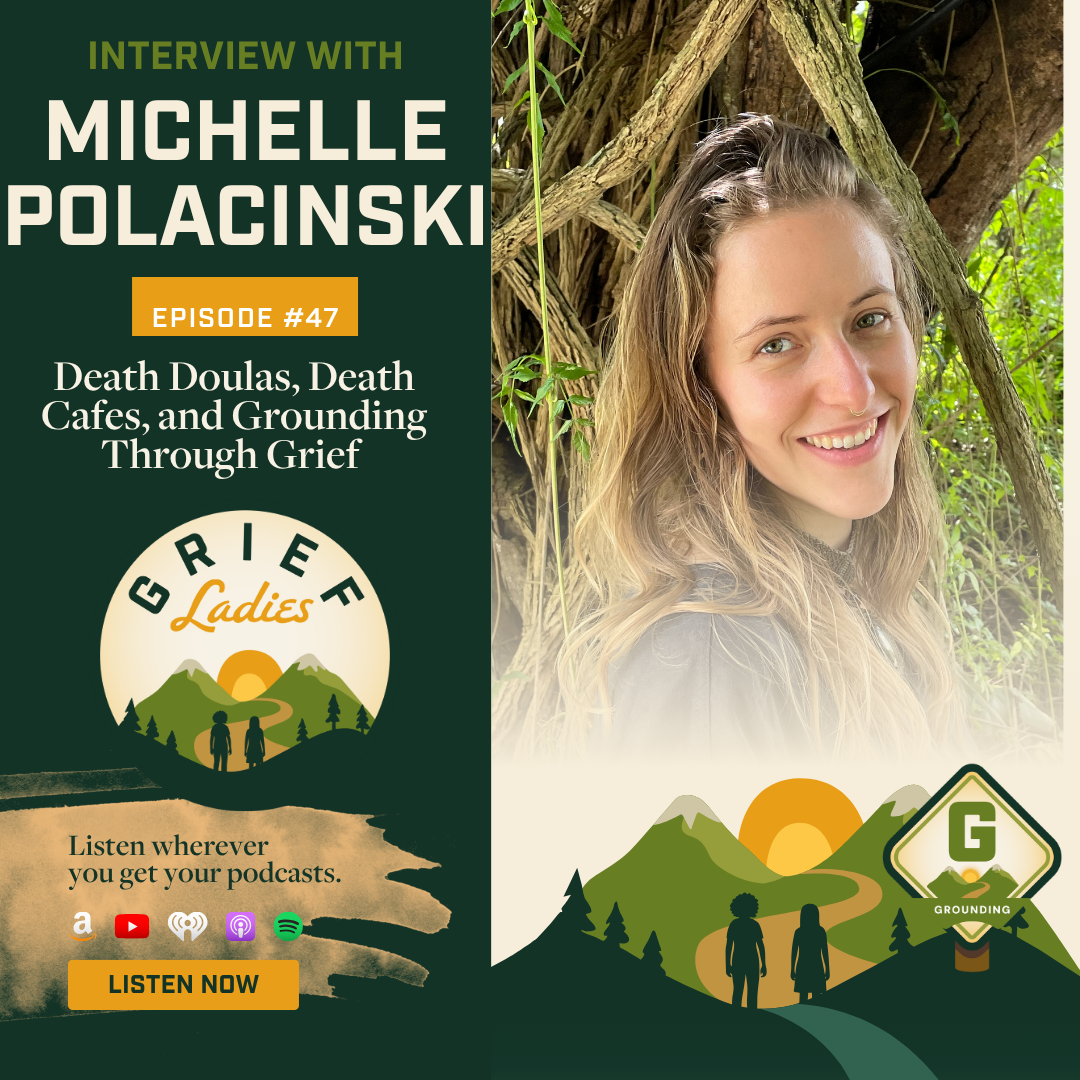
Death Doulas, Death Cafes, and Grounding Through Grief with Michelle Polacinski
Death Doulas, Death Cafes, and Grounding Through Grief with Michelle Polacinski
What is a death doula — and do you actually need one? In this episode, end-of-life doula, herbalist, and death cafe facilitator Michelle Polacinski breaks it all down. Michelle became interested in death and dying after a near-deadly reaction to an antibiotic at age 23 left her unable to walk for months, facing her own mortality alone and far from home. That experience transformed her life — and eventually led her to the work she does today.
Michelle explains the role of a death doula and how they work alongside hospice, what happens at a death cafe and why talking openly about death matters, and the Swedish death cleaning movement — a practical and meaningful way to prepare your loved ones and spark important conversations before it's too late.
She also shares her personal grounding practice and her biggest takeaway for anyone navigating grief: when you need to cry, just cry. Don't hold back.
Death Cafe: https://deathcafe.com
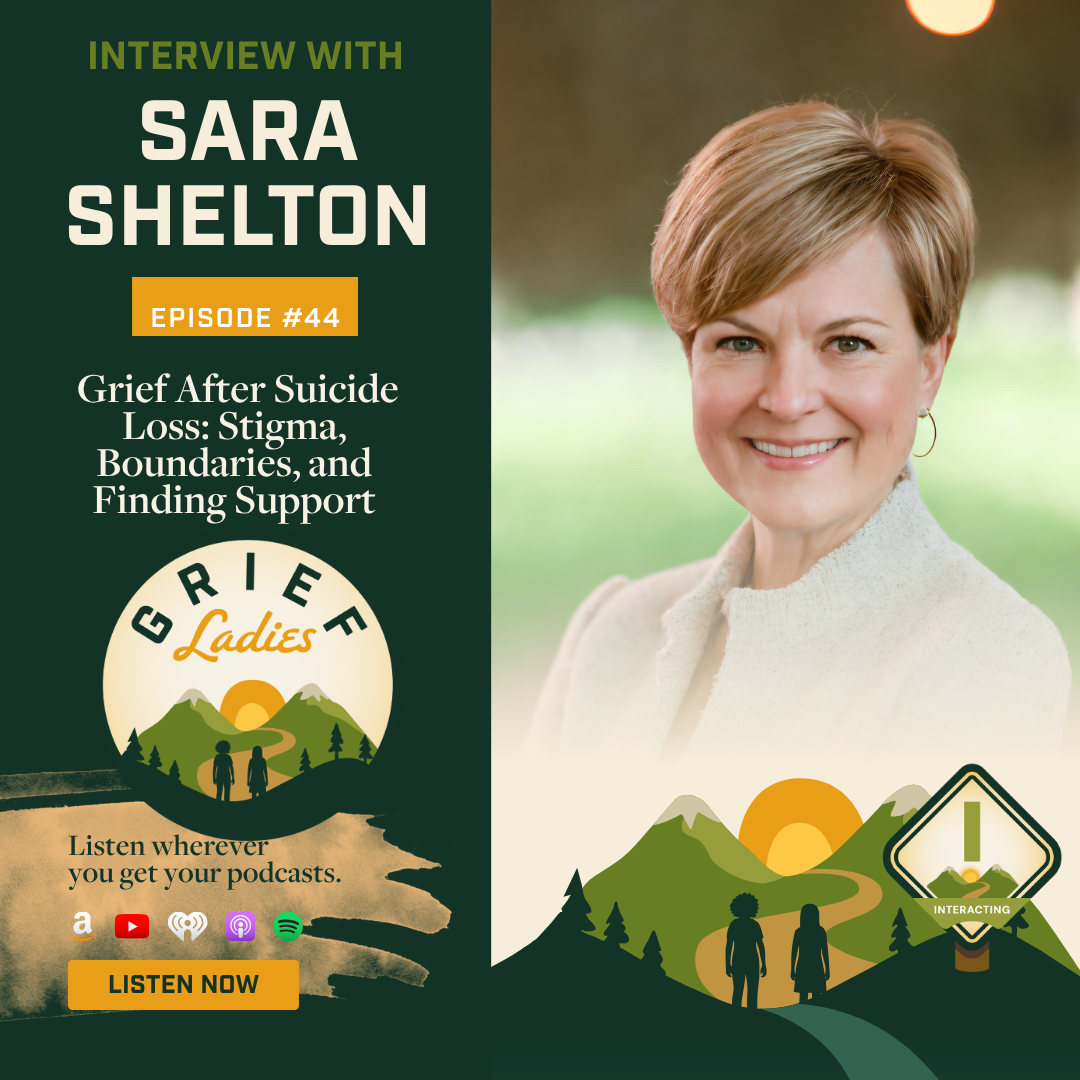
Grief After Suicide Loss: Stigma, Boundaries, and Finding Support with Sarah Shelton
Grief After Suicide Loss: Stigma, Boundaries, and Finding Support with Sarah Shelton
Suicide loss is one of the most isolating and misunderstood grief experiences there is — and Sara Shelton knows this firsthand. After losing her sister Heidi to suicide in 2019, Sara navigated stigma, family silence, and a profound lack of resources for suicide loss survivors. Now, as founder of The Postvention Project, she's working to change that.
In this episode, Sara talks openly about why suicide grief is different, how stigma keeps survivors isolated, and why boundaries during grief are not about pushing people away — they're an act of love and self-preservation. She also shares what she's learning through her survivor research interviews, why finding community with other suicide loss survivors is one of the most powerful steps toward healing, and what to say — and not say — when someone you love is grieving a suicide loss.
If you or someone you know has been impacted by suicide loss, this episode offers honest, compassionate insight from someone who has lived it.
If you are struggling, please reach out to the 988 Suicide and Crisis Lifeline by calling or texting 988.
🔗 The Postvention Project: https://www.postventionproject.com 🔗 Sara on LinkedIn: https://www.linkedin.com/in/sarashelton/
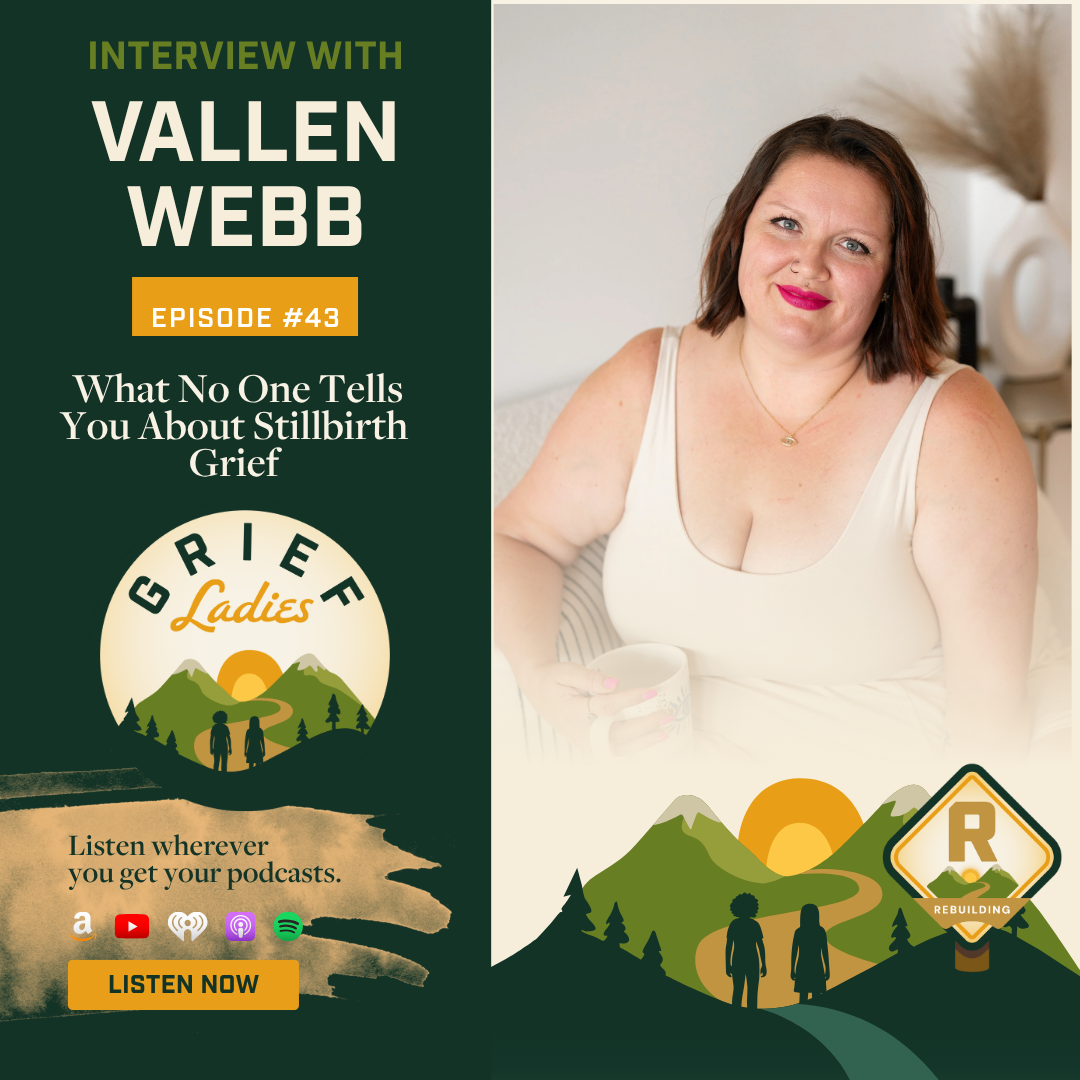
What No One Tells You About Stillbirth Grief with Vallen Webb
What No One Tells You About Stillbirth Grief with Vallen Webb
Stillbirth grief is one of the most misunderstood and isolating experiences a family can go through — and Vallen Webb knows this firsthand. After the stillbirth of her daughter Evelyn in 2019, Vallen navigated postpartum depression, rage, isolation, a husband deployed overseas who never got to hold his daughter, and a cascade of secondary losses that took years to untangle.
In this episode, Vallen shares what she wishes society understood about stillbirth and infant loss, how disenfranchised grief shows up for bereaved families, and why routine became her survival tool when everything else felt out of control. She also offers four simple but powerful self-care anchors — sun, movement, water, and sleep — and talks honestly about how she continues to honor Evelyn seven years later.
Her mission says it all: grief doesn't need fixing. It needs witnessing.
🔗 Instagram: https://www.instagram.com/evelynjamesandco/ 🔗 Facebook: https://www.facebook.com/ValenWebb
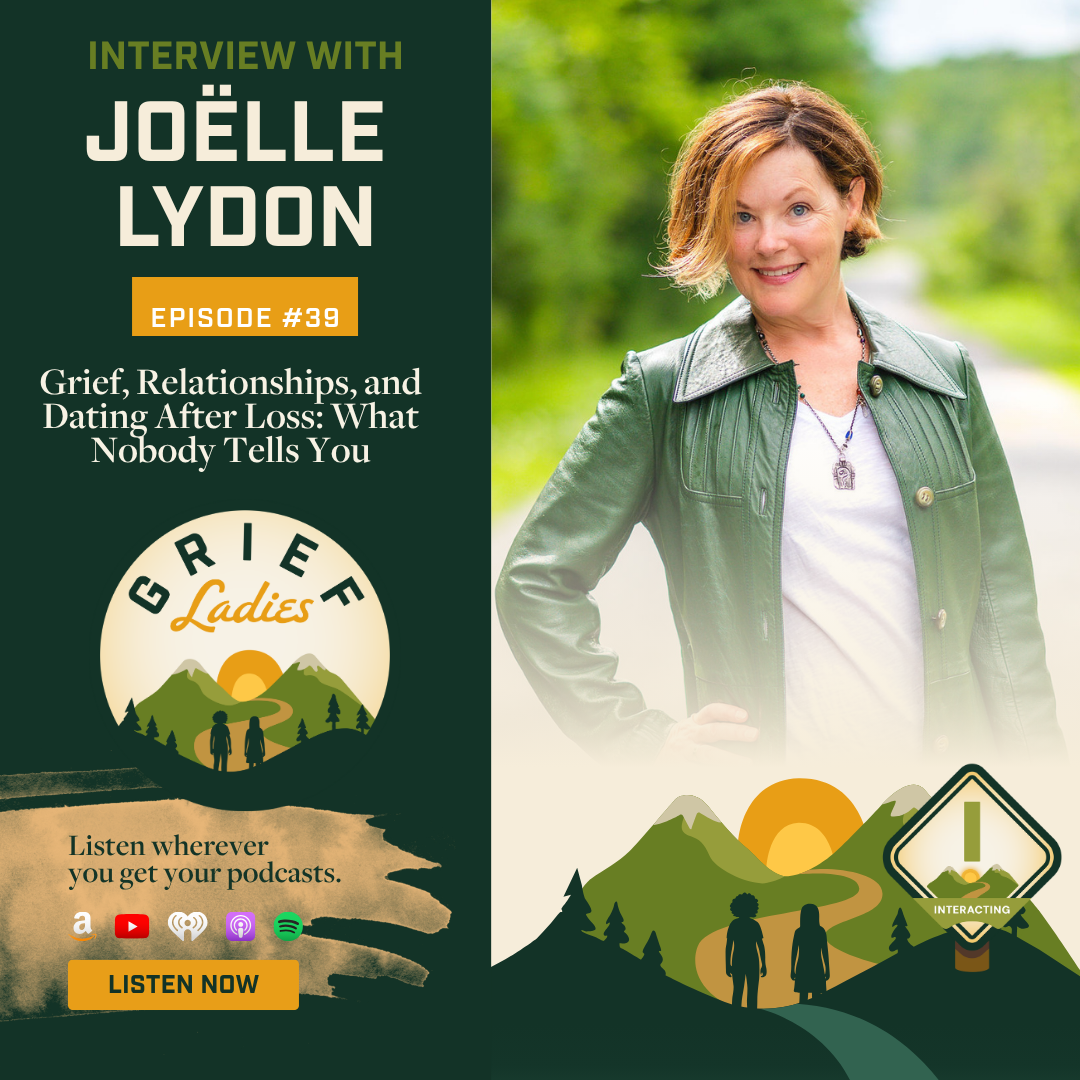
Grief, Relationships, and Dating After Loss: What Nobody Tells You with Joëlle Lydon
Grief, Relationships, and Dating After Loss: What Nobody Tells You with Joëlle Lydon
When someone is deep in grief, the people closest to them often want to help — but don't know how. And the grieving person? They're often too exhausted to explain. In this episode, relationship coach and author Joelle Lydon breaks down what's really happening in relationships when grief enters the picture, how both partners can navigate it without losing each other, and what dating after loss actually looks like.
Joelle talks about the power of making clear and specific requests, why partners often inadvertently short-circuit the grief process by trying to fix things too quickly, and her concept of the sacred third — the relationship itself as something both people contribute to or take away from. She also dives into dating after loss — why transparency beats strategy, why dating is a sorting process not a search, and how companionship can look very different than you'd expect.
Plus: a beautiful in-the-moment insight about honoring a friend through daily "marquee moments" at the dinner table.
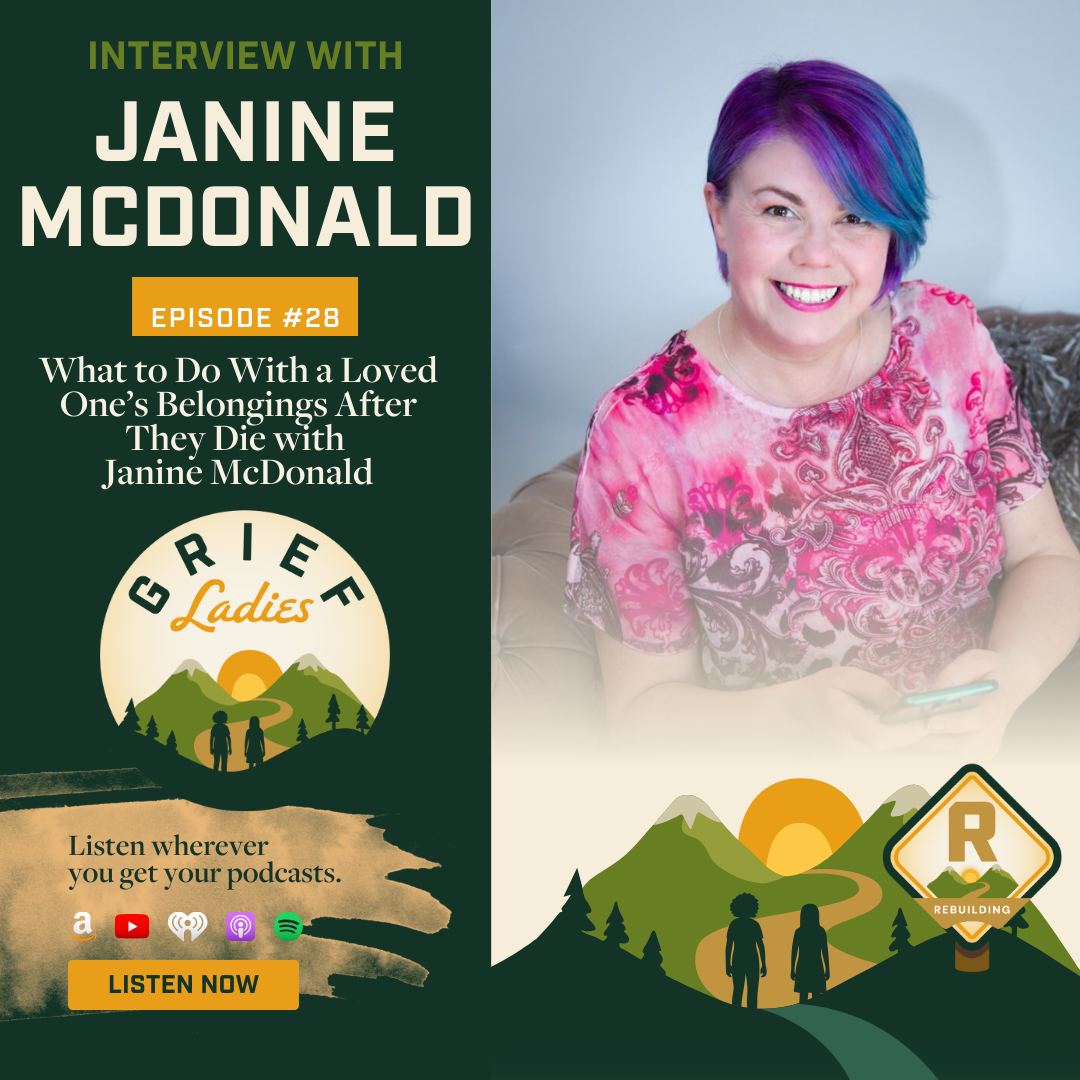
What Do You Do With a Loved One's Belongings After They Die?
What to do with a loved one’s belongings when they die?
Sorting through a loved one's belongings after they die is one of the hardest parts of grief — and one of the least talked about. The short answer: start with the stories behind the things, not the things themselves, and give yourself permission to go at whatever pace you need. In this episode of the GRIEF Ladies Podcast, Kelly and Karyn sit down with decluttering specialist Janine McDonald to explore the emotional and practical realities of going through someone's stuff.
Why Is This So Much Harder Than It Sounds?
It's rarely the furniture that stops people in their tracks. More often it's the small things — a pillbox, a well-worn hat, something that seems insignificant to everyone else but holds an entire relationship inside it. Janine explains that objects carry stories, and those stories are what make this process so emotionally complex. Her approach isn't about tidying up — it's about understanding what something meant before deciding what to do with it.
Research from the American Psychological Association identifies decision-making as one of the most cognitively taxing tasks during bereavement, as grief significantly affects attention, memory, and executive function — which helps explain why even small choices about belongings can feel impossible.
How Do You Move Forward Without Feeling Like You're Letting Go of the Person?
This is where the episode gets really good. Janine shares specific, compassionate strategies for when you want to keep everything, when family members disagree, when there's no sentimental meaning but releasing something still feels wrong, and how to repurpose items that can't be used the way they were intended. She also offers one practical gut-check question that Karyn said she'll be thinking about for a long time.
The through-line of everything Janine shares: the memories live in you, not in the objects.
Listen to the full episode (https://youtu.be/9OXwDgETf6E?si=Ky5BkdP1RfvObfWI) to hear Janine's step-by-step approach, her real client stories, and her advice for anyone who feels completely stuck on where to even begin.
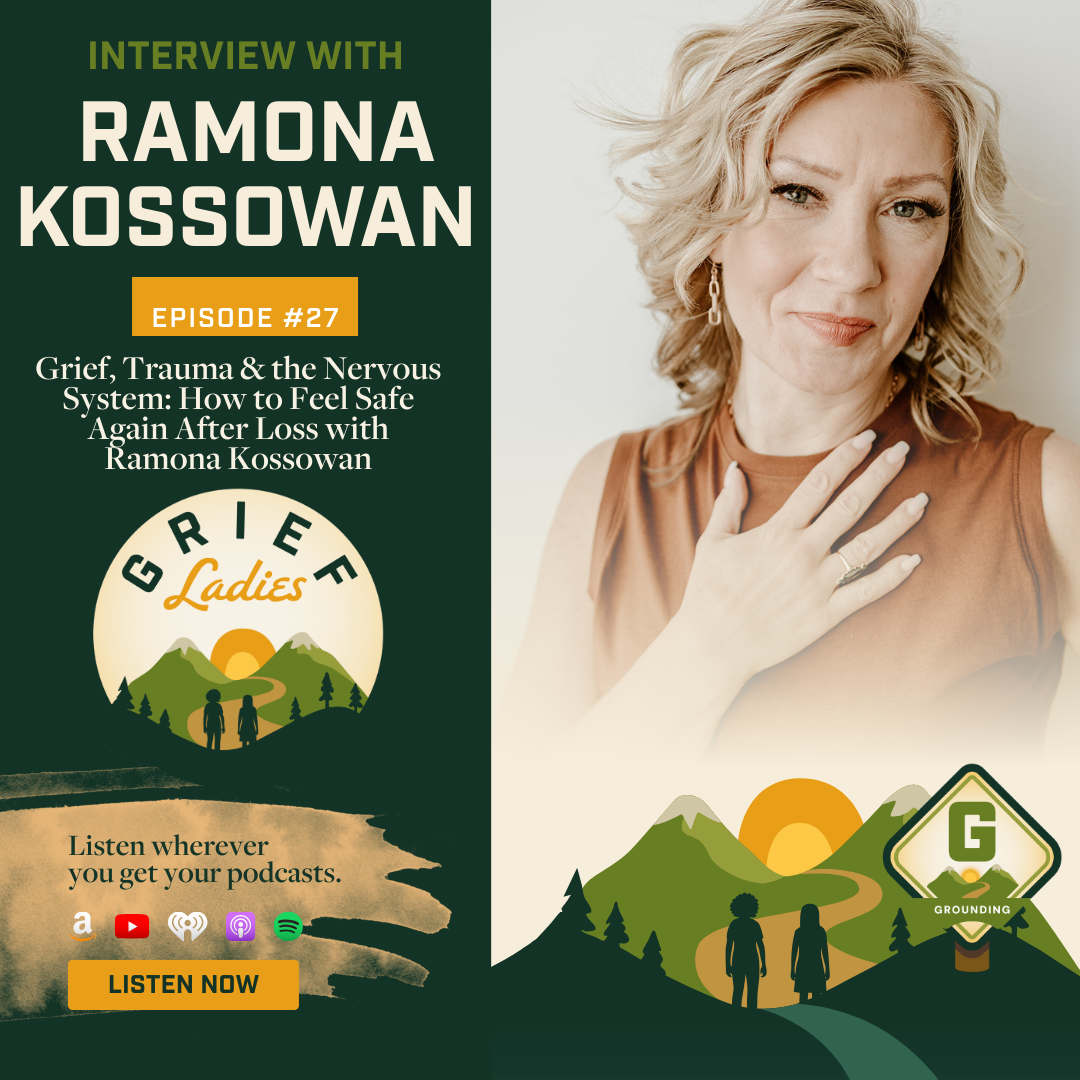
How Does Grief Affect Your Body — And What Can You Do About It?
How Grief Affects Your Body — and What Helps | GRIEF Ladies Podcast
Grief doesn't just live in your mind — it lives in your body, and your nervous system experiences loss as a threat to safety. The short answer to what helps: gentleness, not force. In this episode of the GRIEF Ladies Podcast, Kelly and Karyn are joined by gentle trauma release practitioner and personal empowerment coach Ramona Kossowan to talk about what's really happening in the body during grief, and what actually helps.
Why Does Grief Feel So Physical?
Sleep disruption, digestive issues, pain, a complete loss of identity — these aren't separate from grief, they're part of it. Ramona explains that trauma and grief live in the nervous system, not just in our thoughts. When we experience significant loss, our sense of safety is threatened, and the body responds accordingly. Most people don't recognize this as trauma — especially when a death was anticipated or happened after a long illness. But as Ramona points out, elements of shock exist no matter what, and the caregiving experience itself can leave lasting imprints on the nervous system.
Research published in Psychosomatic Medicine found that bereaved individuals show measurable changes in immune function, cardiovascular stress response, and sleep architecture — confirming that grief's impact on the body is biological, not just emotional.
What Actually Helps the Body Feel Safe Again?
This is where the episode gets practical. Ramona's approach — rooted in polyvagal theory — focuses on sending the nervous system cues of safety rather than pushing through or forcing progress. That can look like a warm breakfast eaten slowly, gentle movement outdoors, time with people who don't require you to perform okay-ness, or working with someone trained to help the nervous system process what it's been holding.
She also names something not enough people hear: a person can be well-meaning and still not be emotionally safe for you right now. That's not a judgment — it's useful information about what your body needs.
The episode includes Ramona's own grief story, which adds depth and honesty to everything she shares about why this work matters.
Listen to the full episode for Ramona's accessible explanation of polyvagal theory, what a gentle trauma release session actually looks like, and her specific guidance on movement and body-based coping skills during grief.
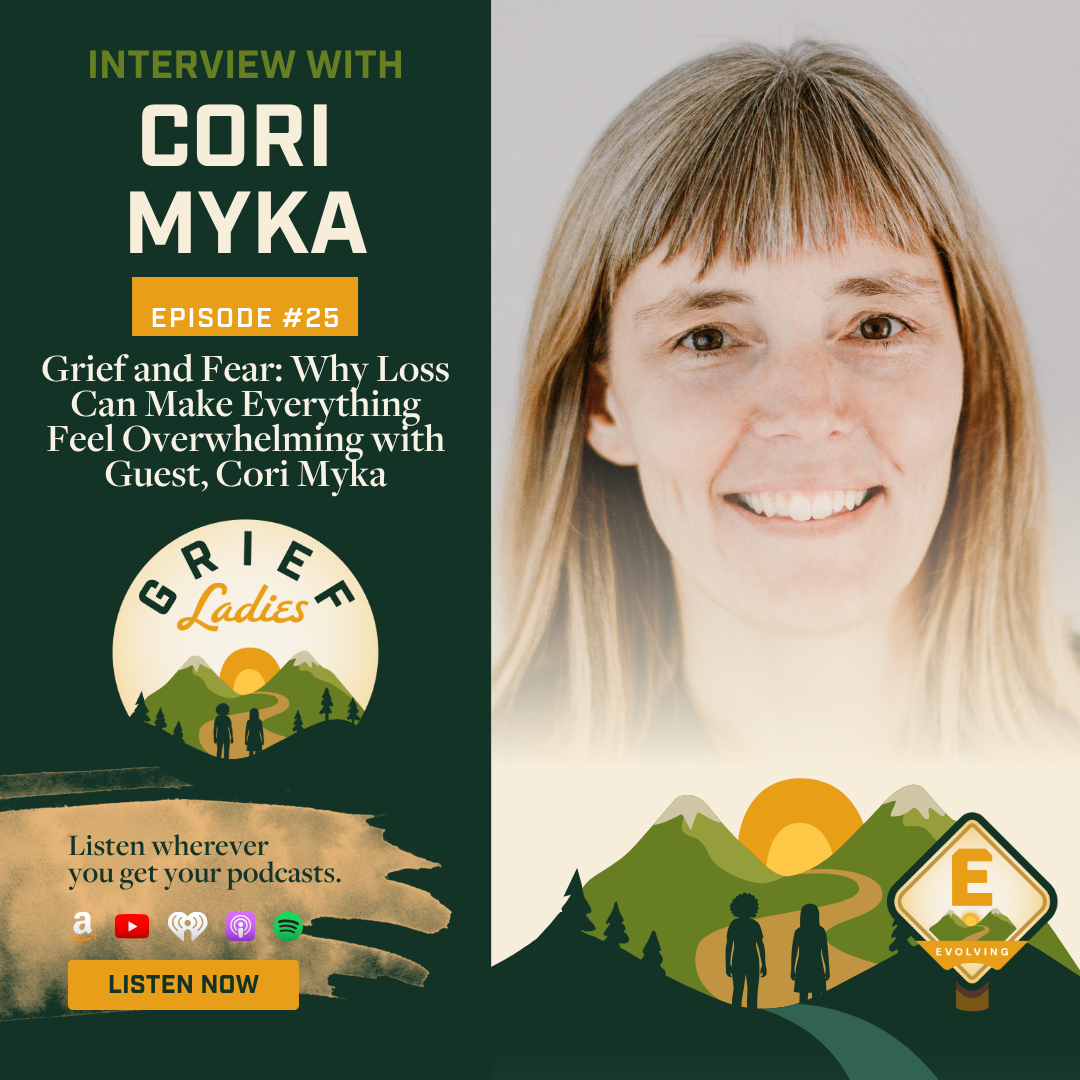
What Learning to Swim Taught Us About Grief — with Cori Myka | GRIEF Ladies Ep. 25
what-learning-to-swim-taught-us-about-grief-cori-myka
What could learning to swim possibly have to do with grief?
More than you'd think.
In Episode 25 of GRIEF Ladies: A Guide to What Comes Next, we welcomed Cori Myka, founder of Calm Within Adult Swim, and the conversation took
a turn we didn't expect — in the best possible way.
Fear. Overwhelm. Not Knowing What Comes Next.
Cori works with adults who are terrified of the water. And as she started describing what her clients experience — the fear, the overwhelm,
the pressure to get it right — we couldn't help but notice how much it sounded like grief.
Because grief puts you in a whole new world too. One where you don't know the rules, you don't know what's coming, and everyone around you
seems to expect you to just figure it out.
Cori shared a powerful framework for slowing all of that down — and it turns out it works whether you're standing at the edge of a pool or
standing at the edge of a whole new life without someone you love.
The Takeaway You Can Try Right Now
One of our favorite moments in this episode was when Cori shared a simple, practical tool you can use anywhere — in a meeting, in a grocery
store line, at a family gathering — when a grief wave hits and you need to come back to yourself.
It's small. It's tangible. And it just might help.
You'll have to listen to get the full details. 🎧
Plus — Cori Shares Something Personal
We also asked Cori how she celebrates those who have died in her own life. Her answer was beautiful, unexpected, and something that stuck
with us long after we stopped recording.
Listen to Episode 25 here: https://youtu.be/aiLqrtJuFI8
Connect with Cori:
📲 @CalmWithinAdultSwim
Have you ever found an unexpected connection between something in your life and your grief? Tell us in the comments of the video — we'd love to hear it.