
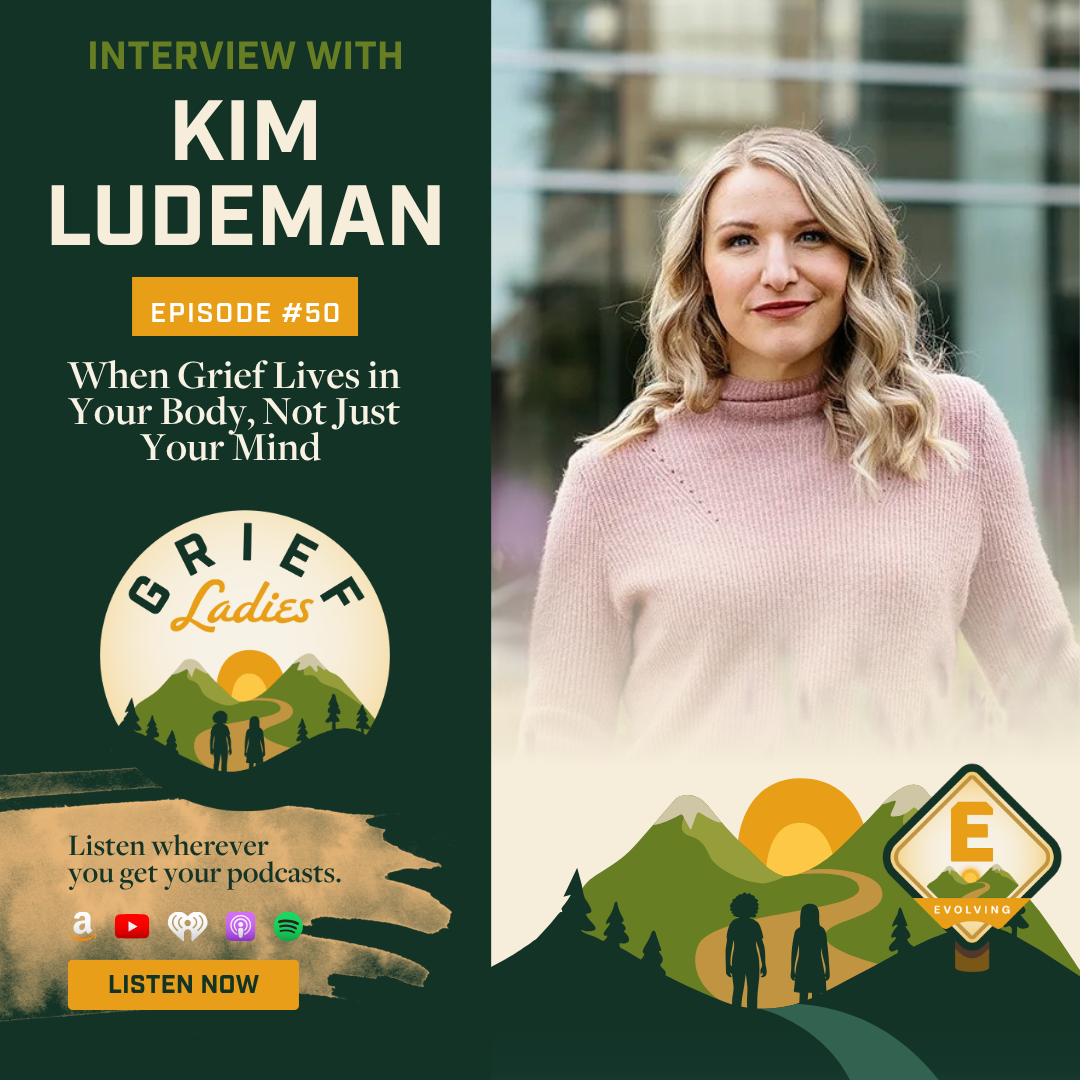
When Grief Lives in Your Body, Not Just Your Mind with Kim Ludeman
When Grief Lives in Your Body, Not Just Your Mind with Kim Ludeman
Sometimes grief doesn't show up as sadness you can talk through — it shows up as tension in your chest, flashbacks you can't shake, or emotions so big they feel impossible to access. In this episode, certified coach and brainspotting practitioner Kim Ludeman explains why grief often gets stored in the body and what it takes to actually reach it.
Kim introduces brainspotting — a powerful brain-body therapy that works from the bottom up, accessing what talk therapy alone often can't reach. She explains how a session works, what the difference is between brainspotting and EMDR, and how expansion brainspotting can help grievers build capacity not just for pain, but for joy, peace, and connection too.
Kelly also shares her own deeply personal experience using brainspotting the day after her father's death — how it stopped the flashbacks, ended the nightmares, and changed the image she carries of him forever.
🔗 Kim's Website: https://kimludeman.com 🎙️ Captivatingly Confident Podcast: https://captivatinglyconfident.com
Listen on your favorite podcast platform or watch on YouTube at: https://youtu.be/7EUt8xqnVjY
Why Does Taking Care of Your Body Matter When You're Grieving?
Why Does Taking Care of Your Body Matter When You're Grieving?
Grief is not just emotional — it is physical. The exhaustion, the brain fog, the heaviness you feel in your chest are real, measurable effects happening in your body. Taking care of your physical basics after a loss is one of the most direct ways to give yourself the capacity to move through grief. In Episode 2 of the GRIEF Ladies Podcast, Karyn and Kelly break down what Grounding — the G in the G.R.I.E.F. framework — actually looks like in practice.
What is grounding in grief, and why does it come first?
Grounding is what Karyn and Kelly call the basics: eating, sleeping, and moving your body. These are usually the first things to go when someone dies — and they quietly make everything harder. Grounding is not about being healthy in the traditional sense. It is about giving your nervous system enough to work with so grief does not take everything from you.
When you are not eating enough, the brain fog that already comes with grief gets worse. When sleep is disrupted — and grief almost always disrupts sleep — your emotional regulation suffers, your immune system takes a hit, and the simplest decisions feel impossible. When your body is completely still, grief tends to stay stuck in it.
Grief is associated with elevated inflammatory markers including C-reactive protein and interleukin-6, which increase vulnerability to physical illness during bereavement. Twenty minutes of walking has been shown in multiple studies to be as effective as an antidepressant for mood. (Sources: Kiecolt-Glaser et al.; exercise and depression research literature)*
The reframe Karyn offers in the episode is worth sitting with: these basics are some of the only things you still get to have a say in. When grief makes you feel swept along by a life you didn't choose, what you eat, how you protect your sleep, whether you move your body — those are things you can still control. That is not a small thing.
What can you actually do this week if you're barely functioning?
Karyn and Kelly are not asking you to overhaul anything. The action step from this episode is simply to observe — track your eating, sleep, and movement for three days. Not to judge what you find. Just to notice it. What time did you eat, and how did you feel after? What got in the way of sleep? Did you move at all, and what did that feel like?
Awareness without judgment is where momentum begins. Small, consistent steps build on each other — and sometimes a small shift in one area quietly improves the others. Moving your body a little makes sleep slightly easier. Sleeping better makes it more possible to eat something real. These basics are intertwined, which is exactly why Grounding comes first.
Hear Karyn and Kelly go deeper — including their own personal experiences navigating this after loss: https://youtu.be/vgcyjbdDAkc?si=bPsxl5H0B9-bVsl6
Other GRIEF Ladies Podcast Episodes:
What Is the G.R.I.E.F. Framework and How Does It Work? → https://youtu.be/_0ld4dnUT7I?si=89da5nbDXHa9KOmZ An introduction to all five pillars and why this approach is different from traditional grief models.
Why Rebuilding Structure After Loss Matters More Than You Think → LINK:https://youtu.be/wbJVX3Q2iv8?si=RDMeAnz56crw8hih — Episode 3 covers the R: how routine and daily structure help grieving people regain a sense of footing.
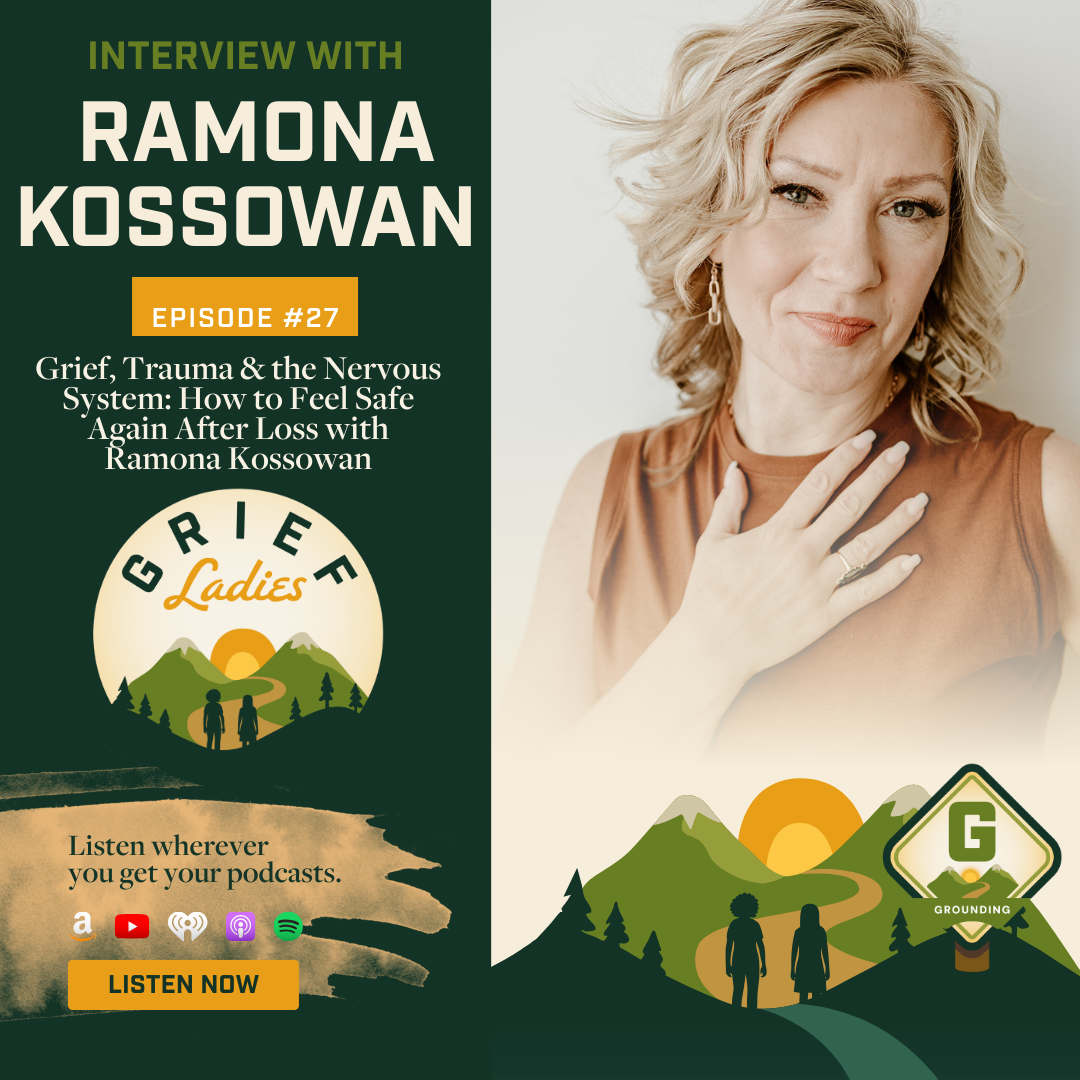
How Does Grief Affect Your Body — And What Can You Do About It?
How Grief Affects Your Body — and What Helps | GRIEF Ladies Podcast
Grief doesn't just live in your mind — it lives in your body, and your nervous system experiences loss as a threat to safety. The short answer to what helps: gentleness, not force. In this episode of the GRIEF Ladies Podcast, Kelly and Karyn are joined by gentle trauma release practitioner and personal empowerment coach Ramona Kossowan to talk about what's really happening in the body during grief, and what actually helps.
Why Does Grief Feel So Physical?
Sleep disruption, digestive issues, pain, a complete loss of identity — these aren't separate from grief, they're part of it. Ramona explains that trauma and grief live in the nervous system, not just in our thoughts. When we experience significant loss, our sense of safety is threatened, and the body responds accordingly. Most people don't recognize this as trauma — especially when a death was anticipated or happened after a long illness. But as Ramona points out, elements of shock exist no matter what, and the caregiving experience itself can leave lasting imprints on the nervous system.
Research published in Psychosomatic Medicine found that bereaved individuals show measurable changes in immune function, cardiovascular stress response, and sleep architecture — confirming that grief's impact on the body is biological, not just emotional.
What Actually Helps the Body Feel Safe Again?
This is where the episode gets practical. Ramona's approach — rooted in polyvagal theory — focuses on sending the nervous system cues of safety rather than pushing through or forcing progress. That can look like a warm breakfast eaten slowly, gentle movement outdoors, time with people who don't require you to perform okay-ness, or working with someone trained to help the nervous system process what it's been holding.
She also names something not enough people hear: a person can be well-meaning and still not be emotionally safe for you right now. That's not a judgment — it's useful information about what your body needs.
The episode includes Ramona's own grief story, which adds depth and honesty to everything she shares about why this work matters.
Listen to the full episode for Ramona's accessible explanation of polyvagal theory, what a gentle trauma release session actually looks like, and her specific guidance on movement and body-based coping skills during grief.
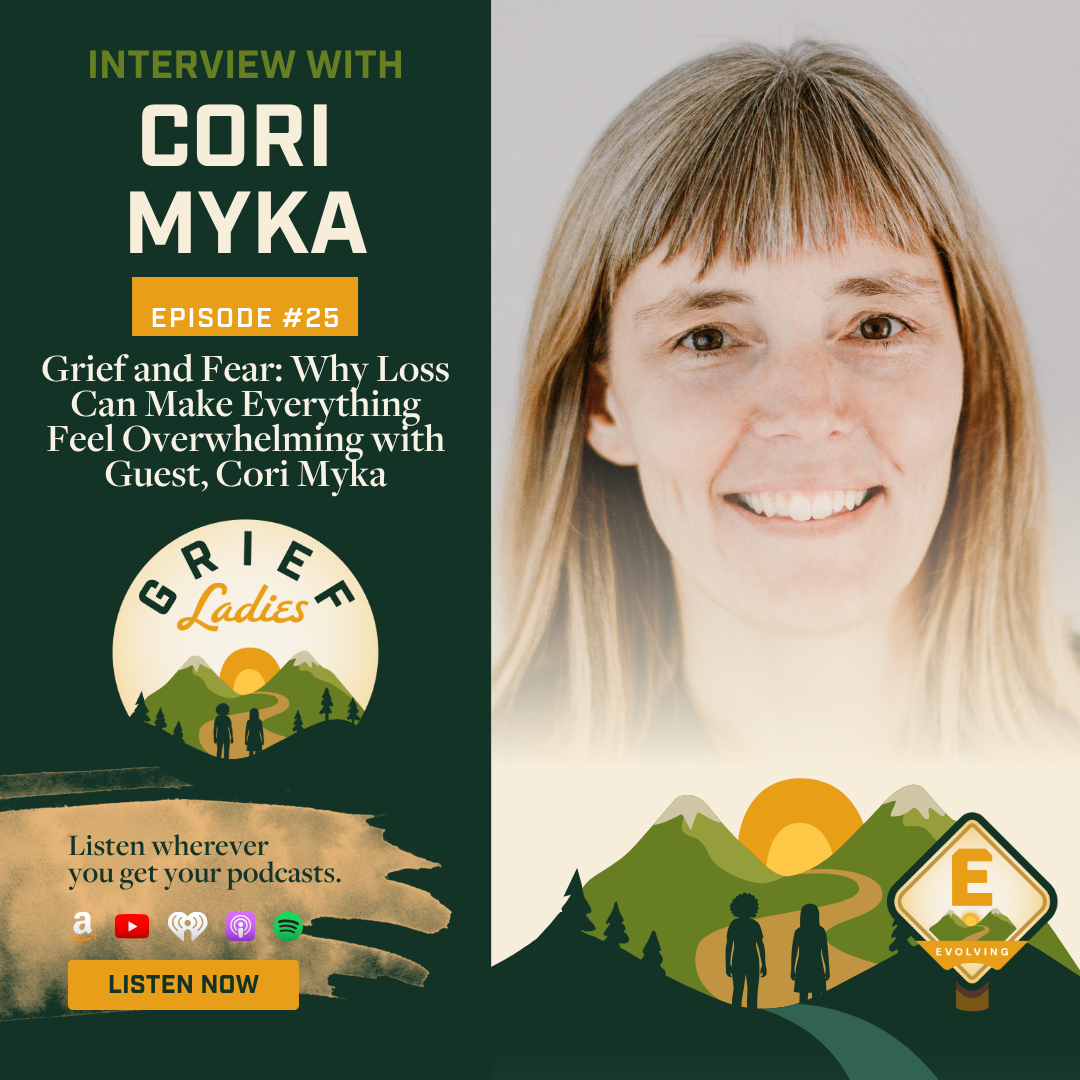
What Learning to Swim Taught Us About Grief — with Cori Myka | GRIEF Ladies Ep. 25
what-learning-to-swim-taught-us-about-grief-cori-myka
What could learning to swim possibly have to do with grief?
More than you'd think.
In Episode 25 of GRIEF Ladies: A Guide to What Comes Next, we welcomed Cori Myka, founder of Calm Within Adult Swim, and the conversation took
a turn we didn't expect — in the best possible way.
Fear. Overwhelm. Not Knowing What Comes Next.
Cori works with adults who are terrified of the water. And as she started describing what her clients experience — the fear, the overwhelm,
the pressure to get it right — we couldn't help but notice how much it sounded like grief.
Because grief puts you in a whole new world too. One where you don't know the rules, you don't know what's coming, and everyone around you
seems to expect you to just figure it out.
Cori shared a powerful framework for slowing all of that down — and it turns out it works whether you're standing at the edge of a pool or
standing at the edge of a whole new life without someone you love.
The Takeaway You Can Try Right Now
One of our favorite moments in this episode was when Cori shared a simple, practical tool you can use anywhere — in a meeting, in a grocery
store line, at a family gathering — when a grief wave hits and you need to come back to yourself.
It's small. It's tangible. And it just might help.
You'll have to listen to get the full details. 🎧
Plus — Cori Shares Something Personal
We also asked Cori how she celebrates those who have died in her own life. Her answer was beautiful, unexpected, and something that stuck
with us long after we stopped recording.
Listen to Episode 25 here: https://youtu.be/aiLqrtJuFI8
Connect with Cori:
📲 @CalmWithinAdultSwim
Have you ever found an unexpected connection between something in your life and your grief? Tell us in the comments of the video — we'd love to hear it.