
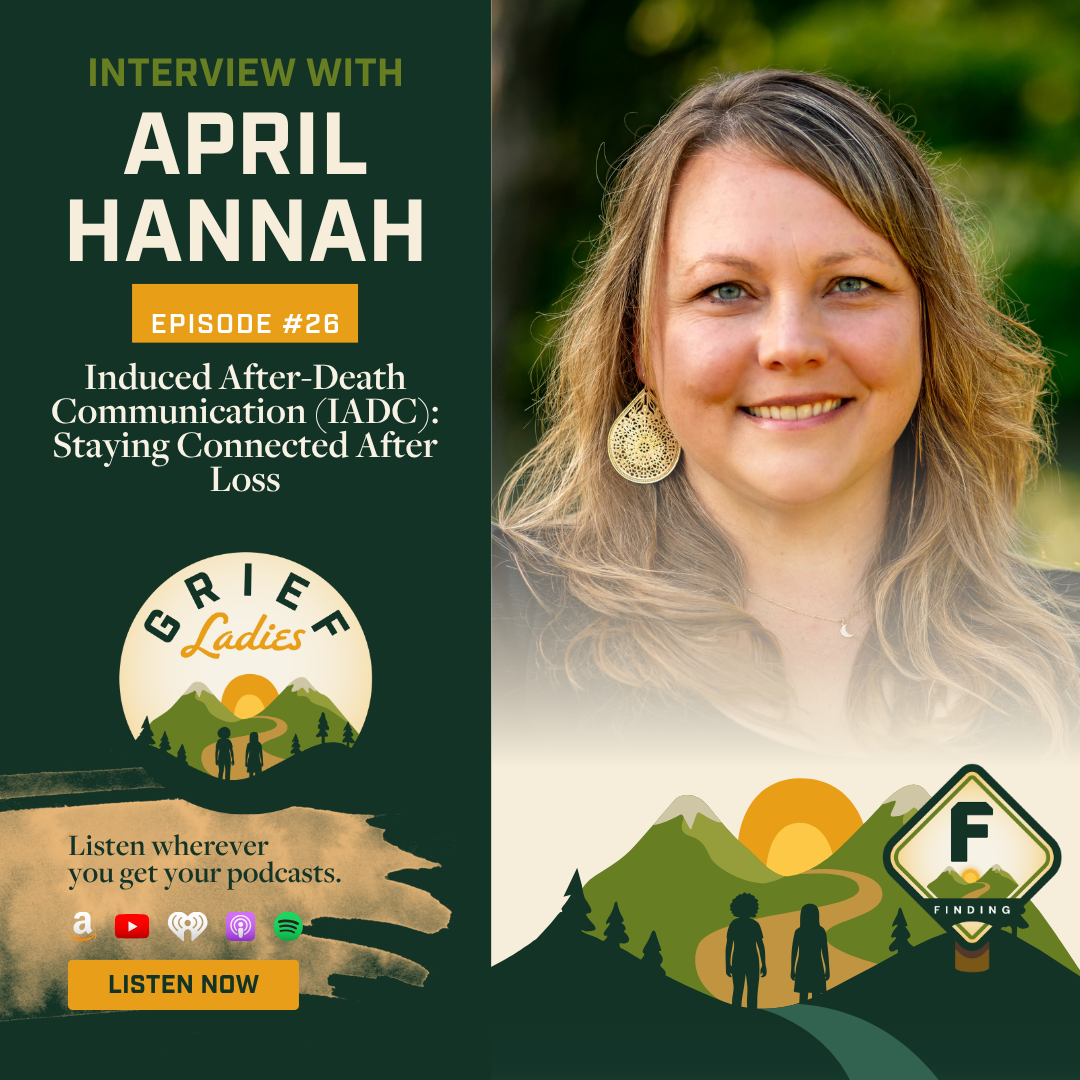
Can You Still Connect With Someone Who Has Died? April Hannah Says Yes | GRIEF Ladies Ep. 26
Can You Still Connect With Someone Who Has Died? April Hannah Says Yes | GRIEF Ladies Ep. 26
What if the connection doesn't have to end when someone dies?
That's exactly what we explored in Episode 26 of GRIEF Ladies: A Guide to What Comes Next with our guest April Hannah — licensed therapist,
intuitive healer, and someone who has spent over 26 years helping people heal in ways that go far beyond traditional therapy.
Where Science Meets Spirit
April's work bridges two worlds that don't always get to sit at the same table — clinical psychotherapy and what she calls the mystical. Think Reiki, sound healing, guided art, and a fascinating evidence-based therapy protocol called Induced After-Death Communication.
Yes, you read that right. Evidence-based.
What makes this episode extra special is that April and I (Kelly) are trained in this protocol together — and actually just wrapped up one of our Induced After-Death Communication retreats the weekend before we recorded this. Safe to say we are both still buzzing from it.
And before you scroll past — research suggests that between 50 and 75 percent of people experience some form of after-death communication after
losing someone they love. So chances are, something April talks about in this episode is going to feel very familiar.
Signs, Dreams & Staying Connected
April gets into the many ways those who have died may reach out — and more importantly, how you can open yourself up to receiving those
connections. She shares practical steps anyone can start today, whether you're a believer, a skeptic, or somewhere in between.
Because, as April says, she's no longer skeptical. And after hearing what happened at her retreat the weekend before this episode was recorded,
we're not surprised. You'll want to hear that part. 🎧
Plus — April Gets Personal
We asked April how she stays connected to her own mom, who has died. Her answer is tender, real, and gives you a glimpse into how someone who does this work professionally still navigates it in her own everyday life.
Listen to Episode 26 here:https://youtu.be/bTayMPCvKYY
Connect with April:
📲 Search: April Hannah + after death communication
Have you ever experienced a sign or moment of connection from someone who has died? We'd love to hear about it in the comments on YouTube. This community is a safe space to share — no skepticism here.

GRIEF & YOUR ENERGY
Grief and Your Energy
Why grief feels exhausting… and what helps
Have you noticed grief makes everyday tasks feel harder?
You may feel:
• Mentally drained
• Emotionally overwhelmed
• Socially exhausted
• Physically tired
You are not imagining this.
Grief requires a huge amount of nervous system energy.
Many grieving people worry:
“I should be able to handle more.”
But grief is heavy.
Imagine carrying an invisible backpack filled with memories, emotions, and change… all day long.
Of course you get tired.
This is where ENERGY MAPPING can help.
Energy mapping helps you notice:
✔ What drains your energy
✔ What restores your energy
✔ What feels meaningful but still exhausting
✔ How to pace yourself in grief
Some experiences have TWO types of energy cost:
Physical Energy: How much effort your body uses
Emotional Energy: How much grief or stress it activates
Both matter.
Examples:
Talking about your loved one
💛 Meaningful
⚡ Emotionally draining
Family gatherings
💛 Important
⚡ Physically and emotionally tiring
Resting afterward is not weakness.
It is support.
Try this simple reflection:
👉 After I do __________
👉 My body usually feels __________
Awareness helps you plan care instead of pushing through exhaustion.
One helpful strategy is called Recovery Pairing.
This means: Pair draining experiences with supportive ones.
Examples:
Grief ritual → quiet walk
Social event → alone time
Therapy session → calming music or journaling
Grief changes capacity.
Energy mapping helps you work WITH your capacity instead of fighting it.
Pacing grief is how many people survive it.
💬 Reflection Question:
What is one activity that drains your energy right now… and one that helps restore it?