

Feeling Stuck in Grief? You Are Not Alone — and Here Is Why It Happens
Feeling stuck in your grief?
Recently, Karyn and I were doing a live for our GRIEF Ladies Facebook Community and we were asked this question:
“My husband died five years ago, but I feel stuck and frozen. I understand that grief doesn’t have a timeline, but I can’t seem to make any progress with moving forward. I don’t care about much. I have no motivation or interest in things. I’ve tried therapists and a grief group, but nothing seemed to help.”
If any part of that resonates with you, please know: what you are experiencing is real, it is common, and there are reasons it happens. Here is a summary of how we answered this question.
Why Grief Can Feel Harder as Time Goes On
It might seem counterintuitive, but many people find that grief becomes more difficult — not easier — after the first year or two. Early grief, while devastating, often comes with what we describe as a kind of “novelty.” There is a lot happening: practical decisions to make, people around you, rituals to attend to. You are in motion, even if that motion is painful.
As time passes, the busyness fades. The people around you may have moved on. And suddenly you are left with a quieter, heavier question: “What now? Is this it?” That stillness can strip away motivation and leave you feeling like nothing will ever change.
There is also the issue of comparison. When we look at our current life in grief, we often measure it against the life we had before our loss. That is an incredibly painful comparison to make, and it can quietly fuel a sense of hopelessness.
Your Nervous System May Be Keeping You Stuck
The word “frozen” is significant. It is not just a metaphor — it can be a physiological response. When we experience profound loss, our nervous system responds. For many people, especially those who lost someone who was their primary source of safety and connection, the nervous system can get locked into what is called a dorsal vagal response: collapse, shutdown, and numbness.
This is your body trying to protect you. It is not a weakness. It is not a character flaw. It is an old, hard-wired survival mechanism. Understanding this distinction matters, because the path forward is not about pushing harder or willing yourself to feel better — it is about gently and incrementally helping your nervous system feel safe enough to re-engage with life.
Roadblock Emotions That Keep Us From Moving Forward
Being stuck is often not just about sadness. Beneath the surface, other emotions frequently act as roadblocks:
• Guilt — for feeling better, for moving forward, for moments of joy
• Anger — at the loss, at circumstances, at the unfairness of it all
• Fear — of the future, of forgetting your loved one, of who you are without them
• Identity loss — “Who am I now?” is one of the most disorienting aspects of grief
One pattern we see frequently, particularly among widows and widowers: a deep-seated fear of feeling better. Many grieving people tell us they feel guilty when they experience happiness, as though moving forward is a betrayal of their loved one. We want to name this clearly — it is not. Moving forward is not leaving your person behind. It is learning to carry them with you.
Not All Therapy and Grief Support Is the Same
If you have tried therapy or a grief group and felt it did not help, please do not take that as evidence that nothing can help you. Consider this: only about 60% of therapists received any education in grief and loss during their training. That means a significant number of well-meaning clinicians simply are not equipped to support grieving clients effectively.
Finding the right therapeutic support is a bit like finding the right bathing suit — the first one you try might not be the right fit, but that does not mean the right one is not out there. We would encourage you to seek out a grief-informed therapist or coach, someone who offers practical tools and not just a space to talk.
The same applies to grief groups. Peer-led groups offer real value, but a group facilitated by a grief-informed professional — one that is action-oriented and gives you tools and frameworks — can be a different experience entirely.
You Grow Around Your Grief — Not Past It
We want to offer one more reframe that we find genuinely helpful: you do not “get over” grief. Your grief does not disappear. What is possible — and what we have seen in our work again and again — is that you grow bigger than your grief. It is still there. But you expand around it.
That expansion happens through small, incremental steps. It happens through connection with others who understand. It happens through the right support, and through learning to move forward with your loved one — not without them.
A Note to Anyone Who Is Stuck Right Now
If you are reading this and recognizing yourself, we want you to hear this: you are not broken. You are not failing at grief. Your nervous system is doing what it was designed to do. Your emotions are real and valid. And the fact that you are still asking questions, still looking for support, still reaching out — that matters.
We wish none of us had to navigate this. But we do know that you do not have to navigate it alone. Join our GRIEF Ladies Community to hear more answers to our group members questions. Join here: https://www.facebook.com/share/g/1AdC4voMEG/
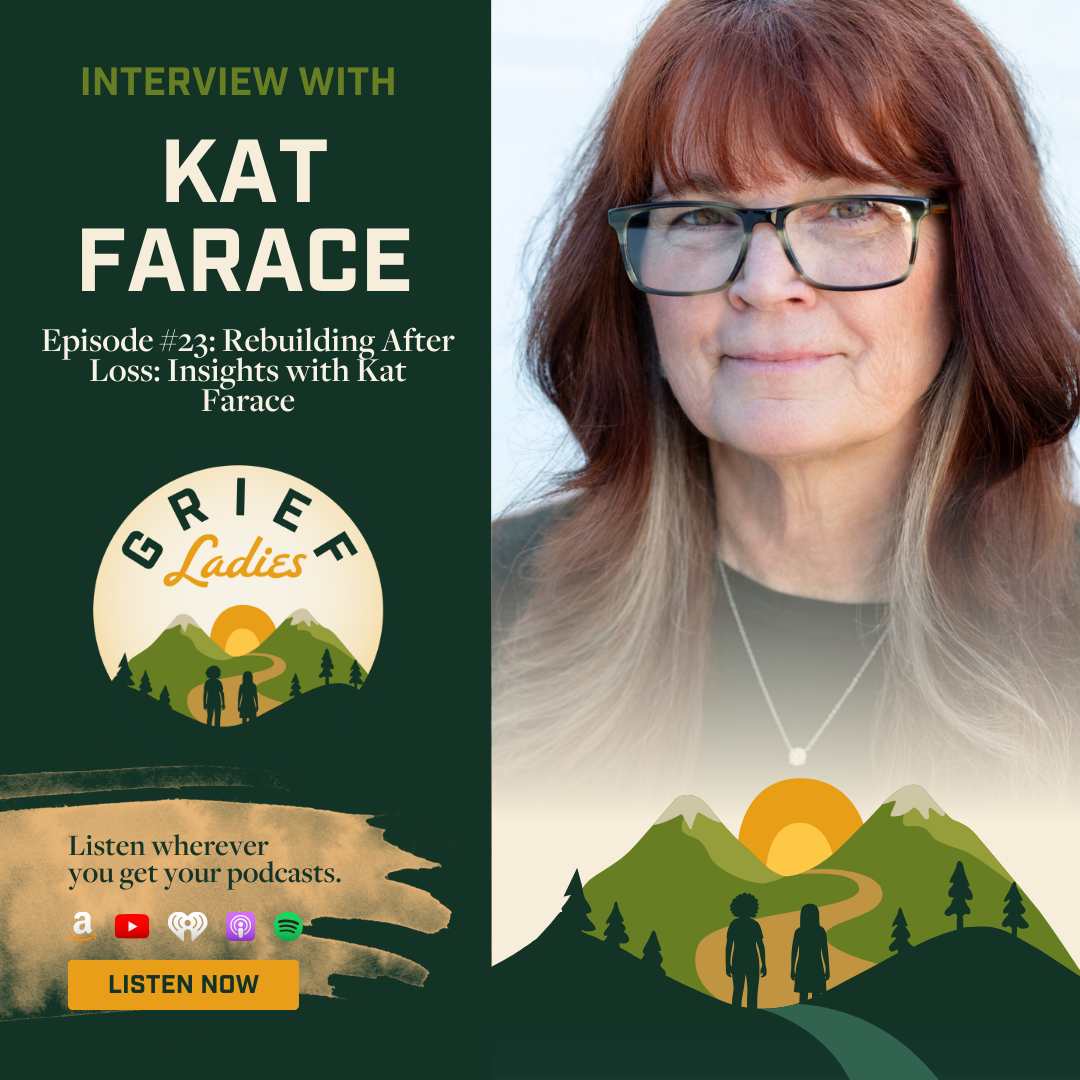
Grief and Routine: Why Structure Matters After Loss with guest, Kat Farace
Grief and Routine: Why Structure Matters After Loss with guest, Kat Farace
If you’re wondering how to rebuild your life after someone dies, you’re not alone. Loss can shatter routines, disrupt your sense of identity, and make everyday tasks feel overwhelming.
In this episode (23) of The GRIEF Ladies Podcast, Karyn Arnold and Kelly Daugherty are joined by grief counselor and hospice expert Kat Farace to explore what “rebuilding” really means after loss. We talk about why routine matters in grief, how small daily structure can support your nervous system, and why rebuilding isn’t about “moving on” — it’s about learning how to live forward while carrying love with you.
In this conversation, you’ll learn:
Why grief disrupts your daily rhythms
How to gently reintroduce routine without pressure
The role of self-care in early and ongoing grief
Why community support matters when everything feels unstable
Practical coping tools to help you feel more steady
This episode connects to the Rebuilding trail marker in our G.R.I.E.F. Framework — focusing on structure, routine, and small steps that create stability in the midst of emotional upheaval.
If you’ve been feeling unmoored, exhausted, or unsure how to function after loss, this episode offers validation, realistic strategies, and encouragement for wherever you are in your grief journey.
Guest Bio:
Kat Farace is an author, speaker, and grief coach with over 25 years of experience in hospiceand end-of-life care, walking alongside individuals and families through life’s most profound moments of loss, love, and transition. Her work is grounded in compassion, honesty, and the deep belief that grief—while never chosen—can become one of our greatest teachers.
Through decades of hospice service, Kat has supported thousands of people as they navigated death, dying, and bereavement, gaining rare insight into the emotional, spiritual, and relational realities of grief. Her approach blends professional expertise with heartfelt presence, offering guidance that is both practical and deeply human.
Kat is the author of the upcoming book Grief the Teacher: The Teacher We Never
Wanted—With the Lessons Only Love and Loss Can Teach, to be released in Spring 2026. In
it, she explores grief not as something to “get over,” but as an experience that reshapes us,
challenges us, and ultimately invites growth, meaning, and connection.
Kat creates space for real conversations about loss—conversations that honor pain while also making room for hope, resilience, and love. Whether speaking to the newly grieving or those carrying loss for a lifetime, she brings a steady, compassionate presence that reminds listeners they are not alone.
Kat Farace’s work continues to reach audiences through coaching, speaking engagements, and storytelling that normalizes grief, dismantles shame, and gently illuminates the path
forward—one honest conversation at a time.
Connect with Kat:
Website: https://www.balanceingrief.com
Instagram: https://www.instagram.com/balanceingrief/
Facebook: https://www.facebook.com/balanceingriefcom
🎙 Listen to Episode 23: Grief and Routine: Why Structure Matters After Loss with guest, Kat Farace
Available now on YouTube and all podcast platforms.

Perfectionists, People Pleasers & Grief
Perfectionists, People Pleasers & Grief
Perfectionists. People Pleasers.
Some will immediately relate to these labels, and some maybe not so much. Yet most people I work with exhibit at least some of these traits, whether they are consciously aware of it or not. For the perfectionists, it may come as an almost badge of honor. A commitment they’ve made to themselves to do everything the best they can, without fail, in every single category of their life. The people pleasers may not be as satisfied with that title. But they also understand it as a necessary skill to function in their lives, and as a way to get along with the people around them.
But what happens when life falls apart? Expectations for ourselves often remain the same, but how can they when EVERY SINGLE THING in life has changed? Do these old habits and old roles still work?
Let’s start by understanding what it really means to be a perfectionist or a people pleaser. While I work with (and know personally) plenty of people who possess both tendencies, there’s nothing saying that one has to go with the other. In order to understand where you may fit, it’s important to explore each on their own first.
There are a lot of perfectionists in this world.
It can show up in the way a person interacts with others, or how they keep themselves or their home. As a result, a standard and expectation becomes set and it can be very hard to do anything without having to do it really well, all the time.
People pleasers are a little different.
This behavior often comes from childhood, and is a learned response to safety and inclusivity with the world and people around us. People pleasers put others’ needs ahead of their own and for the most part, they’re doing this to the extreme.
So why does it matter in grief?
First: it’s not sustainable. The old habits and old ways of doing things only work when everything else in life is going okay. Next, competing with your “old self” will only create a greater contrast of who you are now, compared to who you used to be. This can add to the intense pressure, unfamiliarity, and uncertainty that a griever is feeling on a daily basis.
The problem with perfectionists and grief.
If you have always tried to do everything “right”, you may already be used to some of the pressure and stress that comes with it. But now you’ve had a significant loss, and you’re likely experiencing a level of stress that you never have before. You can barely think straight. How can you be expected to do the “right thing” when NOTHING feels right anymore?
In grief, being a perfectionist can actually equate to something that most would feel is far from perfect = procrastination. Decision making is a huge task in grief and if the old habits of perfectionism continue, a griever may find themselves making no decisions at all. The fear of doing the “wrong” thing may leave you feeling stuck, even hopeless.
Diminished self-esteem is also a huge concern for any griever, and if you feel that you are constantly falling short, your image and self worth will only sink lower.
The reason why people-pleasing tendencies can’t continue.
Unlike the perfectionists who are trying to make things just right in their own lives, people pleasers are trying to do it for everyone else instead. Here’s the problem when it comes to life after loss – a griever doesn’t even know what they need or how to make themselves feel any peace. So how can they be expected to anticipate the needs of anyone else?
It doesn’t help that some of the biggest challenges in grief come from those around you. Whether it’s in the form of real or perceived expectations, most people feel very disconnected from their loved ones following loss. Managing the emotions and needs of others takes the kind of higher-order thinking that a person in grief just doesn’t have access to. And for most it’s not a case of not wanting to be a help or support to others. They just may feel that they no longer can.
How to stop being a perfectionist or people pleaser today.
I often make comparisons to physical health when describing grief. When it comes to our physical health, we are much more understanding of what we can and can’t do. If you have a broken arm, you would never expect to be able to help a friend move their couch. And your friend wouldn’t ask you to.
But what about the brokenness that comes with grief? Can we take a more honest look at what we actually can and can’t do emotionally? And can we start reframing our interactions with ourselves and others accordingly?
This is where change begins.
First, in observation. Watch yourself and your thoughts. What are your expectations for yourself? Consider what old instincts are kicking in and how often you are telling yourself that you “should” be doing something. And then consider the reality of whether you really can (or want to).
Next, in practice. You’ve got to start somewhere. If you’re a perfectionist and worried about how clean the house is (or isn’t), consider changing your standards. For now. Maybe at some point you’ll decide to go back to having the cleanest house on the block. But for now that just may not be something you have the energy for. Grief is exhausting. Use your energy wisely.
What about my friends and family?
How will they react if I’m no longer a perfectionist or people pleaser? We all know what we expect from ourselves, but we can’t deny that the people in our lives are probably expecting a lot too. Especially with the passage of time. It’s all well and good for me to give you permission to put a greater focus on yourself and your needs, but will the people around you allow for the same grace? Especially with each day that passes since your loss?
Start by giving yourself permission and know that in a lot of ways, that will be the hardest part. Validate every single reason why you can’t or don’t want to hold yourself to the same expectations as before. And give yourself permission to only do or commit to what you can.
The people around you may need time to adapt, and that’s okay. Communicate. Don’t apologize. If they’re asking, let them know what this process is like for you. And why you need to make some changes in order to survive.
In the end, this grief is your business.
No one else gets to decide what you need in grief. It’s important to remind yourself (regularly!) that you’re doing the best you can. And when you’re feeling like that best isn’t so great, know that how you feel now isn’t how you’ll always feel. Grief is always changing and your needs, wants, limitations, and abilities will all change with it.
For all the perfectionists and people pleasers in this world, I leave you with this. If you’re going to please anyone right now, try pleasing yourself first. Find peace and comfort in little moments whenever you can. And remember that these tendencies were never good for you to begin with. There’s some real growth that can come out of the brokenness of loss. Start today by resetting the expectations you have for yourself, and find growth and perhaps a new strength, in the healing that follows.
Want to read more of Karyn’s blogs visit Grief in Common

Why You Can’t Sleep After Someone Dies
Why can’t I sleep after someone dies?
If sleep has felt impossible since someone died, you’re not imagining it.
Many grieving people struggle with sleep issues, either falling asleep, staying asleep, or both, even if they’ve never had sleep problems before. You might feel exhausted all day, only to lie awake at night. Your mind replays conversations. The house feels too quiet. The bed feels different. Nights stretch longer than they used to.
If this sounds familiar, you’re not alone.
In Episode 22 of The GRIEF Ladies Podcast, we talk openly about why sleep becomes so disrupted after loss and what you can actually do about it.
Why Does Grief Make Sleep So Hard?
After someone dies, everything shifts: your routines, your sense of safety, even your daily rhythms. Nighttime can amplify the absence. There are fewer distractions. More silence. More space for thoughts to wander.
In this episode, we explore:
Why grief impacts sleep
Why nights tend to feel more intense
The difference between temporary sleep disruption and longer-term insomnia
What’s normal (and what’s common) after a loss
Practical Tools You Can Try Tonight
This isn’t just a conversation about why sleep is hard; it’s about what might help.
In this episode, you’ll hear:
Gentle wind-down strategies that don’t feel overwhelming
Simple shifts that make your sleep space feel more supportive
Small rituals that can ease nighttime intensity
Practical ideas you can experiment with right away
No unrealistic advice. No pressure to “fix” your grief. Just real conversation and doable steps.
Grounding When Everything Feels Disrupted
This episode connects to the Grounding trail marker in our GRIEF Framework — focusing on small, steady practices that help you feel more stable when everything feels off balance.
If your days feel foggy and your nights feel long, this conversation is for you.
🎙 Listen to Episode 22: Why You Can’t Sleep After Someone Dies (Grief & Insomnia Explained)
Available now on YouTube and all podcast platforms.
If sleep has been one of the hardest parts of your grief, we hope this episode feels like someone sitting beside you in the dark offering understanding and something practical to try.

How to Honor and Celebrate a Loved One After Death: 5 Real Grief Stories
How to Honor and Celebrate a Loved One After Death: 5 Real Grief Stories
Grief often pulls our focus to the death, what happened, what was lost, and what we are missing.
But many grieving people wonder:
How can I stay connected to my loved one? I don't want to forget them- what should I do?
How do I honor my loved one?
How do I remember them in a way that feels meaningful?
How do I celebrate their life without ignoring the pain?
In this special video from The GRIEF Ladies Podcast, five of our first guests share how they honor and celebrate their loved one’s life after death. Through personal rituals, traditions, everyday habits, and small acts of remembrance, they show that grief can hold both sorrow and love.
At The GRIEF Ladies, we believe grief isn’t about “moving on.” It’s about learning how to carry love forward. We call this Celebrate Their Life, a gentle shift from focusing only on the loss to remembering what remains: the connection, the memories, and the impact that endures. If you are grieving and looking for ideas, comfort, or inspiration for honoring someone who died, this video offers real stories and compassionate support. You are not alone in your grief.
Watch the video at: https://youtu.be/C_f_Ub3DOqE
5 Actionable Steps to Cope With Grief (The GRIEF Ladies Framework)
5 Tools to Help you Cope with your Grief
Grief changes everything—but you don’t have to feel stuck or powerless.
In this video, The GRIEF Ladies share 5 actionable steps you can take after loss, based on our GRIEF framework:
Grounding • Rebuilding • Interacting • Evolving • Finding
This compilation features insights from five powerful guest conversations on the GRIEF Ladies Podcast, offering practical tools to help you:
Feel more grounded when grief feels overwhelming
Rebuild routines and structure after loss
Navigate relationships and communication while grieving
Work through difficult emotions like guilt, anger, and fear
Stay connected to your loved one while discovering who you are now
Whether you’re newly bereaved or living with ongoing grief, these steps are designed to help you feel better now—without letting go of love or connection.
✨ Grief is not something to “get over.”
✨ You’re allowed to want relief and connection.
✨ Small actions can create meaningful change.
To watch the video of these 5 tools to help you on your grief journey visit: https://youtu.be/EqLGul_LcFs