
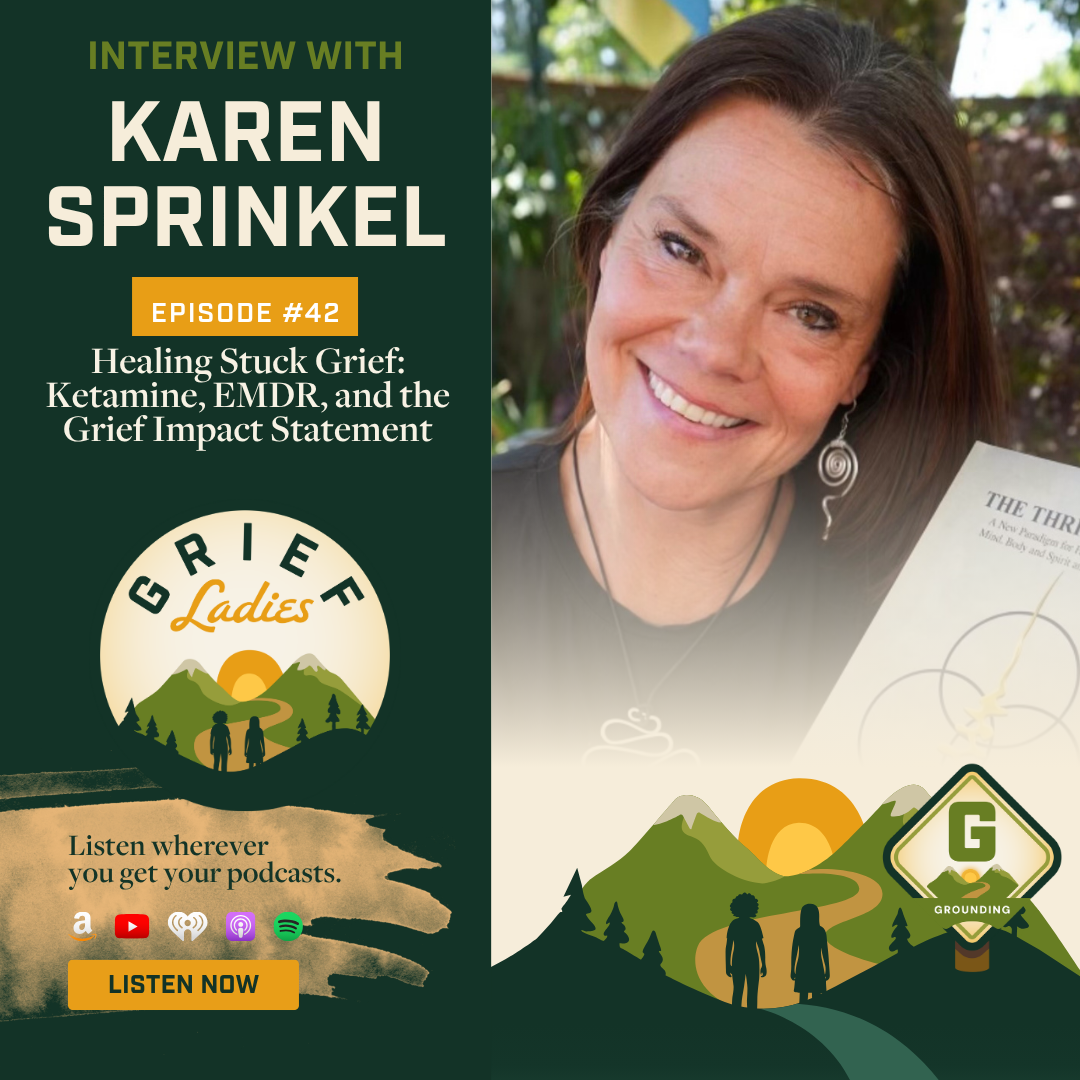
Healing Stuck Grief: Ketamine, EMDR, and the Grief Impact Statement with Karen Sprinkel
Ketamine, EMDR, and the Grief Impact Statement with Karen Sprinkel
Some people do years of therapy and still feel stuck in their grief. In this episode, trauma specialist, psychotherapist, and author Karen Sprinkel shares the innovative east-west approach she has developed over decades of working with grieving clients — combining EMDR, somatic experiencing, internal family systems, ketamine-assisted therapy, and a Buddhist philosophical framework to help people finally find lasting relief.
Karen explains why ketamine combined with traditional trauma modalities produces more durable, sustaining change than either approach alone, how she assesses clients mentally, somatically, and spiritually before any intensive work begins, and what after-death communications look like in a psychedelic-assisted therapy context. She also introduces the grief impact statement — a powerful tool she developed from her early work in victim advocacy that gives grievers a structured way to be witnessed in their loss, whether or not there was ever a perpetrator to face in court.
If you or someone you love has been stuck in grief and wonders if there's something more, this episode offers a genuinely different path forward.
🔗 Karen's Website: https://www.karensprinkel.com 🔗 Instagram: @thethrivingself 🔗 IADC Training: https://www.iadctraining.org
Listen on your favorite podcast platform or watch on YouTube at: https://youtu.be/jE-7rtNJAvo
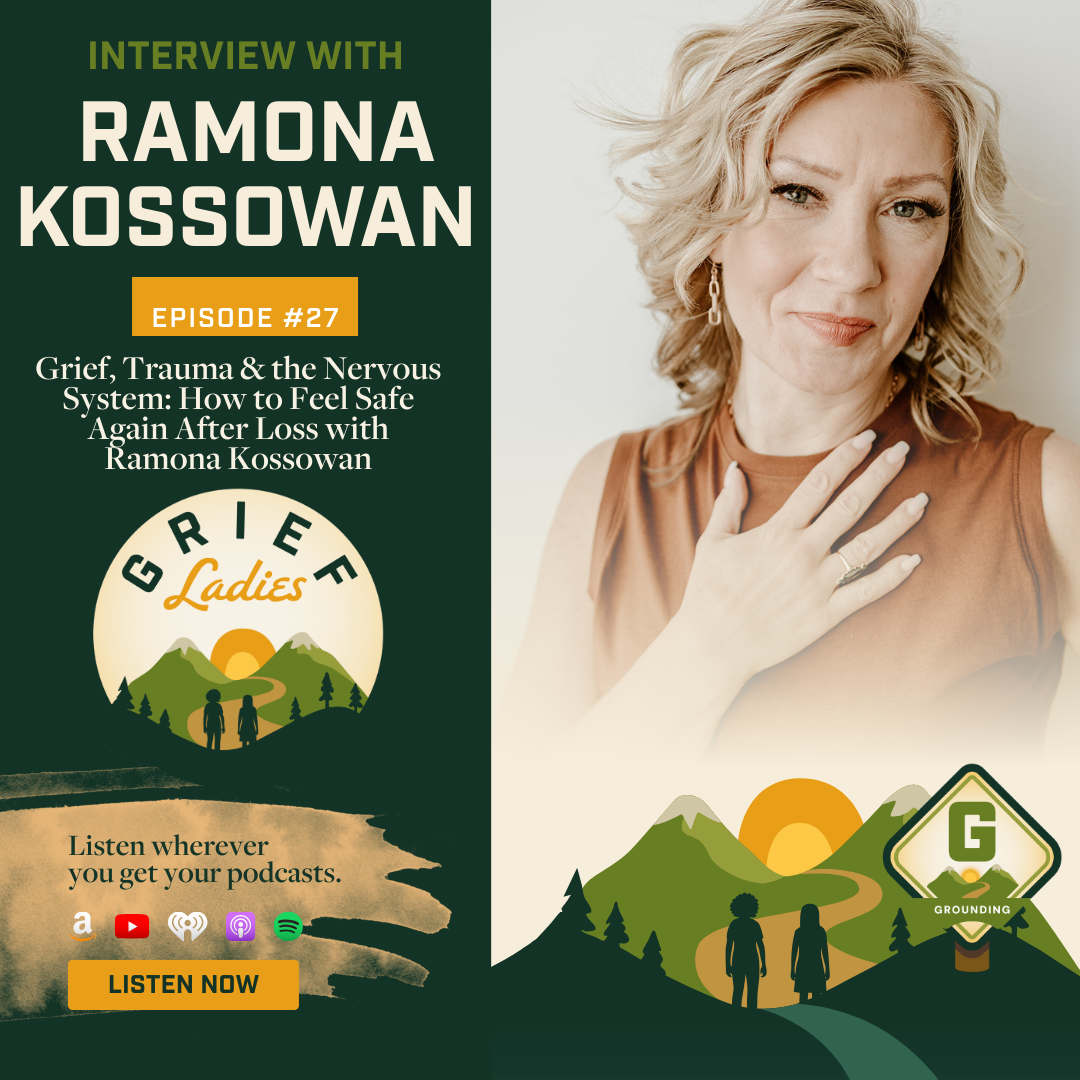
How Does Grief Affect Your Body — And What Can You Do About It?
How Grief Affects Your Body — and What Helps | GRIEF Ladies Podcast
Grief doesn't just live in your mind — it lives in your body, and your nervous system experiences loss as a threat to safety. The short answer to what helps: gentleness, not force. In this episode of the GRIEF Ladies Podcast, Kelly and Karyn are joined by gentle trauma release practitioner and personal empowerment coach Ramona Kossowan to talk about what's really happening in the body during grief, and what actually helps.
Why Does Grief Feel So Physical?
Sleep disruption, digestive issues, pain, a complete loss of identity — these aren't separate from grief, they're part of it. Ramona explains that trauma and grief live in the nervous system, not just in our thoughts. When we experience significant loss, our sense of safety is threatened, and the body responds accordingly. Most people don't recognize this as trauma — especially when a death was anticipated or happened after a long illness. But as Ramona points out, elements of shock exist no matter what, and the caregiving experience itself can leave lasting imprints on the nervous system.
Research published in Psychosomatic Medicine found that bereaved individuals show measurable changes in immune function, cardiovascular stress response, and sleep architecture — confirming that grief's impact on the body is biological, not just emotional.
What Actually Helps the Body Feel Safe Again?
This is where the episode gets practical. Ramona's approach — rooted in polyvagal theory — focuses on sending the nervous system cues of safety rather than pushing through or forcing progress. That can look like a warm breakfast eaten slowly, gentle movement outdoors, time with people who don't require you to perform okay-ness, or working with someone trained to help the nervous system process what it's been holding.
She also names something not enough people hear: a person can be well-meaning and still not be emotionally safe for you right now. That's not a judgment — it's useful information about what your body needs.
The episode includes Ramona's own grief story, which adds depth and honesty to everything she shares about why this work matters.
Listen to the full episode for Ramona's accessible explanation of polyvagal theory, what a gentle trauma release session actually looks like, and her specific guidance on movement and body-based coping skills during grief.