
Growing Around Grief: Staying Connected While Moving Forward After Loss
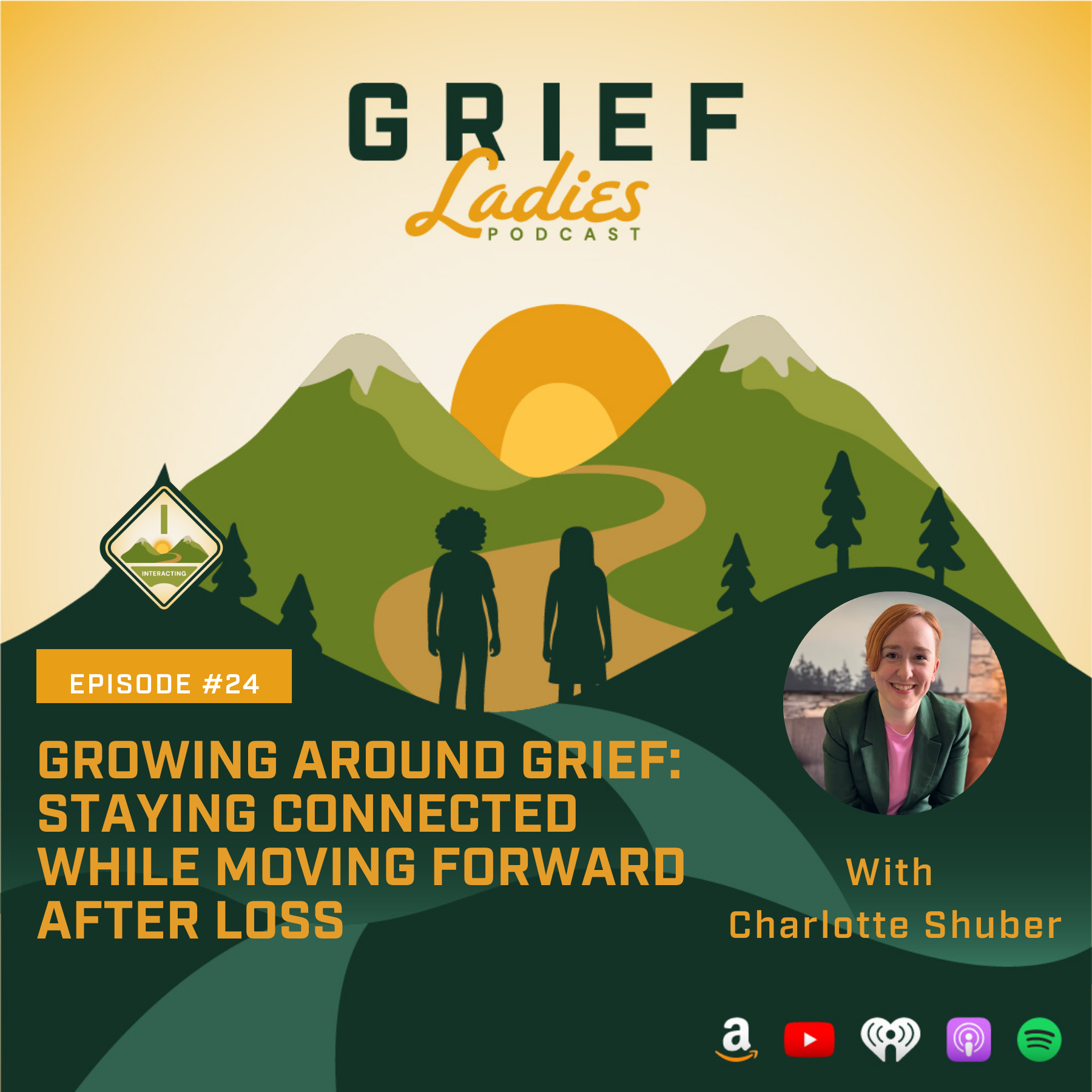
Growing Around Grief: Staying Connected While Moving Forward After Loss with Guest Charlotte Shuber
Have you ever wondered if it's okay to still feel close to someone who has died? If holding onto their memory somehow means you're not healing — or moving on the "right" way?
You are not alone. And the answer might surprise you.
In this powerful episode (24) of the GRIEF Ladies Podcast, licensed clinical social worker Charlotte Shuber flips the script on what grief is supposed to look like — and gives grieving women permission to carry their loved ones with them, not leave them behind.
You Don't Have to Let Go to Move Forward
One of the most damaging myths about grief is that healing means detaching. That at some point, you pack up the memories, put them away, and "get back to normal."
Charlotte's message is the opposite: staying connected to someone who died is not only healthy — it's part of how we grow.
Rather than moving on, she invites us to move forward — with our loved ones woven into who we are becoming.
What You'll Take Away from This Episode
Why "letting go" is the wrong goal — and what to reach for instead
How to interact with your emotions and memories in ways that fuel healing, not avoidance
Charlotte's personal story of loss and how it shaped her clinical approach
Practical tools for maintaining a connection with a loved one while still fully living your life
Why grief is not a problem to solve — it's a relationship to tend
The GRIEF Framework: Interacting
This episode falls under the I — Interacting category of the GRIEF Framework, which focuses on how we engage with our inner world: our emotions, our memories, and the ongoing relationship we have with those we've lost.
Charlotte's approach reminds us that grief is not passive. It requires us to show up — to sit with what hurts, to speak the names of those we love, and to let that love continue to shape us.
About Charlotte Shuber
Charlotte Shuber is a licensed clinical social worker who specializes in grief and loss. She works with children, teens, and adults, combining professional expertise with her own lived experience of loss. Charlotte is passionate about creating a compassionate space where people can explore grief openly, adapt to life changes, and discover meaningful ways to stay connected—with loved ones who have died, with others, and with themselves.
Connect with Charlotte: https://www.creatingspacetherapy.com/charlotte-shuber-lcsw
Ready to Listen?
🎙️ Tune in to this episode of the GRIEF Ladies Podcast wherever you listen to podcasts or on YouTube— and share it with someone who needs to hear that staying connected is not a weakness. It's wisdom.
Because you don't have to choose between honoring them and living fully. You were never meant to.
The GRIEF Ladies Podcast is dedicated to supporting grieving individuals through loss with real conversations, expert guidance, and community.
When the Person Who Helped You Feel Safe Dies
When the Person Who Helped You Feel Safe Dies
Grief is often described as heartbreak, sadness, or longing. But for many grieving individuals, one of the most confusing and distressing experiences is feeling emotionally unsafe after a loss.
People often say things like:
“I don’t feel like myself anymore. I don’t even know who I am.”
“Everything feels harder than it used to.”
“I don’t know how to calm myself down.”
“I feel anxious or numb all the time.”
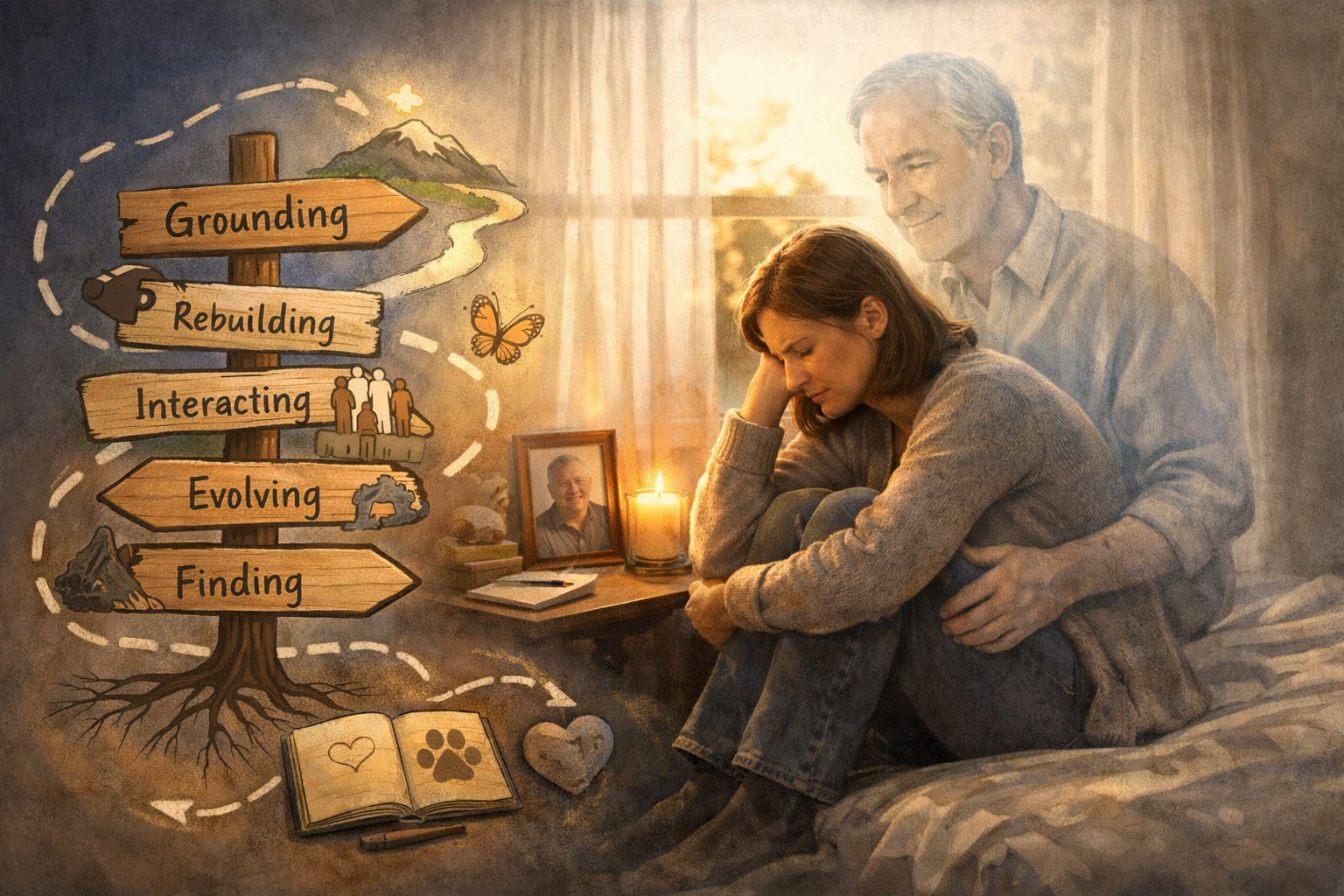
These reactions are deeply rooted in attachment and the loss of co-regulation. And within the GRIEF Ladies Framework: Grounding, Rebuilding, Interacting, Evolving, and Finding, this kind of loss often shakes the very first trail marker: Grounding.
Attachment and Emotional Safety
Attachment theory, originally developed by John Bowlby and expanded through decades of research, helps explain why certain losses feel especially destabilizing. Humans are biologically wired to seek safety through connection. From early childhood through adulthood, attachment relationships help us feel secure, regulated, and supported during times of stress.
Attachment figures, including parents, spouses, close friends, and even our children, are often the people we turn to when we are overwhelmed, worried, or distressed. They help us:
Calm our nervous system
Organize our emotions
Think through our decisions
Feel grounded
Help us feel safe
Over time, these relationships become part of how emotional regulation happens.
What Is Co-Regulation?
Co-regulation refers to the process by which our nervous systems are soothed, stabilized, and organized through connection with others.
A partner’s reassuring voice at the end of a stressful day.
A parent’s steady presence letting you know things will be okay.
A loved one helping you think clearly during a crisis.
These are examples of co-regulation in action. Often, we are not consciously aware of how much co-regulation a relationship provides until it is gone.
When someone who served as a primary source of emotional regulation dies, grief includes more than missing the person. It includes the loss of emotional safety and nervous system stability.
And that is why grief can feel so physically and emotionally disorienting.
When a co-regulator dies, many grieving individuals experience:
Increased anxiety or panic
Overwhelmed with emotions
Numbness or shutdown
Difficulty making decisions
Exhaustion, even after a full night of sleep
A sense of being “lost”
These reactions are not signs of weakness or pathology. They are common nervous system responses to the loss of a co-regulator. The body is adjusting to the absence of someone who helped it feel safe.
Within the GRIEF Ladies Framework, this often impacts more than just Grounding:
Rebuilding feels harder because routines were shared.
Interacting changes because the person you turned to is no longer physically present.
Evolving can bring roadblock emotions like anger, guilt, or fear.
Finding meaning may feel impossible in the early stages.
When someone functioned as your “safe base” or emotional anchor, their death disrupts not only daily life, but also your internal compass.
Staying Connected Without Staying Stuck
For many years, grief was framed as a process of “letting go.” We now know that this is not current. Research supports that maintaining a connection with the person who died can be healthy and adaptive.
In the GRIEF Ladies Framework, this connects closely with Finding.
Many grieving individuals continue to experience support through:
Talking about their loved one and asking, “What would they say to me in this situation?”
Carrying forward their loved one’s values
Rituals that honor the person’s life, such as lighting a candle on hard days
Moments of felt connection during stress
Staying connected to pets or safe people who offer comfort
Staying connected does not mean avoiding grief or refusing to move forward. For many, it is precisely what helps regulate the nervous system and create meaning after loss.
Rebuilding Emotional Safety After Loss
Healing after the death of an attachment figure is not about replacing the person who died. It is about rebuilding emotional safety in new ways. Within the GRIEF Ladies Framework, this often looks like walking through each trail marker intentionally:
Grounding
Learning nervous system regulation skills, including practicing breathing exercises, building body awareness, and making sure you are getting enough sleep.
Rebuilding
Energy mapping: identifying what drains you, what restores you, and how to pace yourself in grief and re-establishing small, predictable routines.
Interacting
Expanding safe sources of connection. Allowing others to support you, even if it feels different than before.
Evolving
Practicing self-compassion during emotional waves. Understanding that anger, guilt, fear, or jealousy are often protective emotions.
Finding
Engaging in ways to stay connected to your loved one and exploring how the relationship continues internally, even as life changes externally.
Over time, many grieving individuals learn to offer themselves some of the reassurance and compassion they once received from others while still honoring the ongoing bond with their loved one.
If grief has made you feel emotionally unsafe, anxious, or disconnected, it may not be because you are grieving incorrectly. It may be because your nervous system lost one of its primary sources of safety.
Grief is not only about losing someone you love. It is also about learning how to live and feel safe without the person who helped regulate your emotional world.